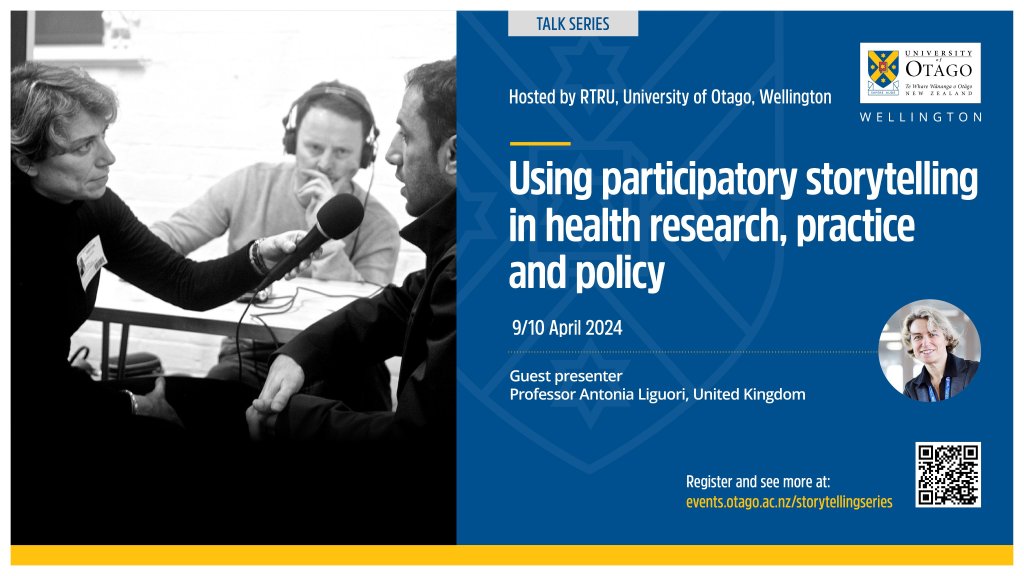
Thrilled to be in Wellington, New Zealand, for a series of storytelling seminars hosted by Otago University and to finally meet in person the brilliant Dr Hemakumar Devan and his colleagues to learn more about their inspiring work on the HRC Whānau opioid stories project, exploring the use of participatory storytelling for a more “holistic” and culturally appropriate approach to chronic pain.
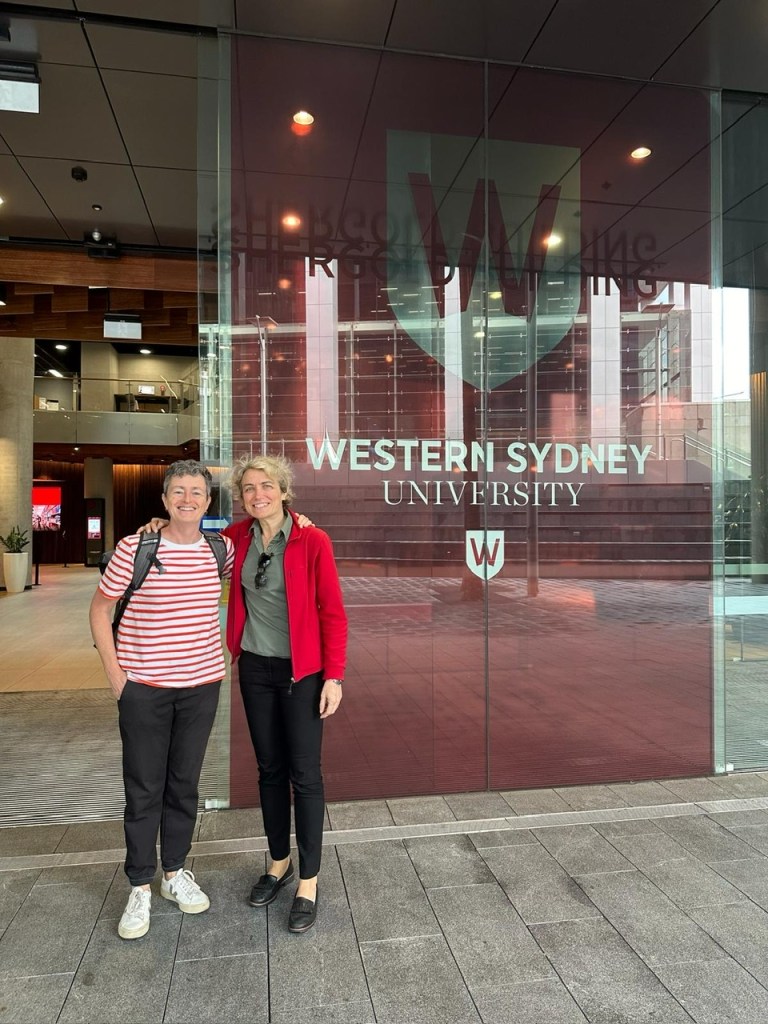
Thursday 28 March, 11am – 1pm, I’ll be facilitating an interactive participatory storytelling workshop at Western Sydney University, School of Humanities & Communication Arts and Writing & Society Research Centre, Parramatta City Campus, Level 7, Rm PC.1.7.78
Please, join us if you are in the area! You can read more information here.
Storytelling helps us unfold the ‘bricolage of the here’ and explore the ‘mess’ of human interactions in a specific place. Stories emerge from individual memories and build shared knowledges. As they convey values and emotions, they are very effective in revealing the differences and similarities between people’s experiences (East, Leah et al. 2010). When those experiences are linked to a particular context, stories become a magnifier of people’s sense of place.
This interactive workshop aims at introducing the concept of place-based participatory storytelling and at exploring how to adapt the 5-step Digital Storytelling model to co-create alternative narratives prompted by the places experienced in our everyday life.
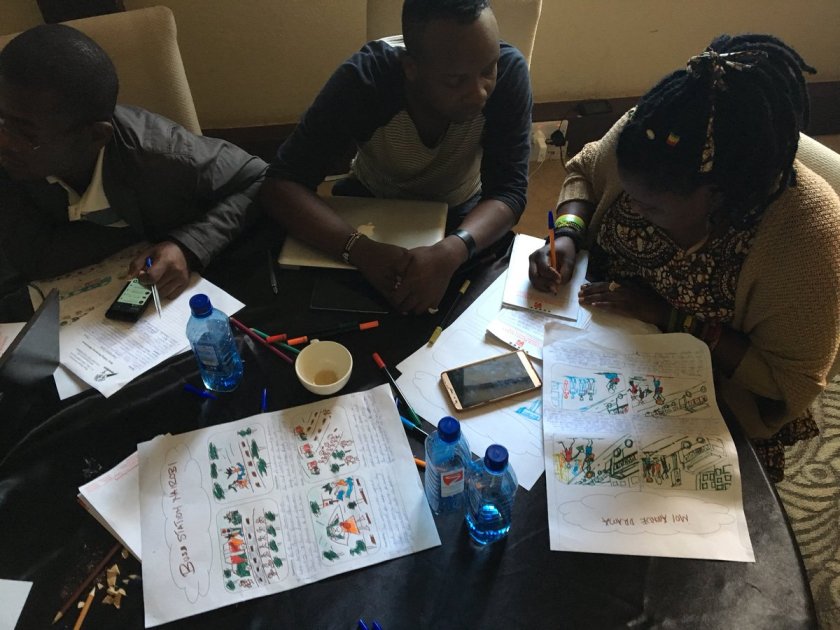
The activity will last 2 hours and will include: – An exploration of various theories and practices within participatory storytelling – A presentation of StoryCenter Digital Storytelling model – A reflection of the effectiveness of creative disruptions to the conventional model – A collaborative storyboarding activity – A collective reflection on the use of storytelling techniques to magnify people’s sense of place.
In this piece we reflect on our process of coming together as an interdisciplinary and inter-professional team to challenge pre-conceived meanings and assumptions when ‘talking about’, ‘designing’ and ‘doing/facilitating/delivering(!)’ community engagement activities around environmental issues.
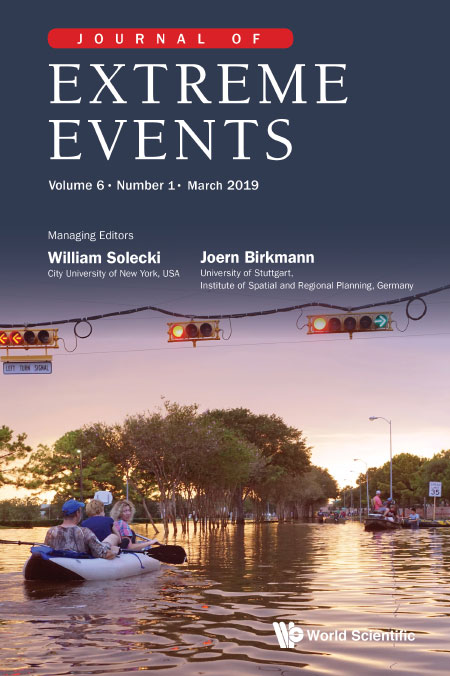
This paper proposes a critical reflection on the use of language to address the challenge of promoting and supporting civic agencies in adaptation to increasing extreme weather risk. Such reflection needs to focus on the opportunities and limitations of language, and the navigation amongst multiple or contested meanings within interdisciplinary and inter-sectorial collaborations. This commentary was inspired by the authors’ conversations on their journey in writing the paper — Liguori et al. (2023) “Exploring the uses of arts-led community spaces to build resilience: Applied storytelling for successful co-creative work” and the impact it had on their understanding of various language systems. Here writing was conceived as a form of networking, undertaking a sequence of intimate, in-depth discussions in a safe space. ‘Playing’ with words, moving out from our disciplinary homes, provided a fertile way of thinking within multi/inter-sectorial/disciplinary conversations to expand the language system for meaningful community engagement around local climate adaptation. Three key terms were at the core of these diverse — and sometimes divergent — ways of looking at social preparedness for extreme weather events: disruption, empowerment, and creative ecosystem. The meta-reflections, based on iterative conversations around these three key terms, highlight the importance of explorations of language as a generative meaning-making process that can be boundary-spanning.
There is significant value in understanding the implications of language used in public engagement — its different interpretations, their loading and potential for transformed thinking when conceived creatively. Such insight can contribute to more effective approaches for participatory research and practice working with communities when addressing issues related to climate adaptation. This commentary argues that the socially engaged or participatory arts are particularly well placed to be active in such processes.
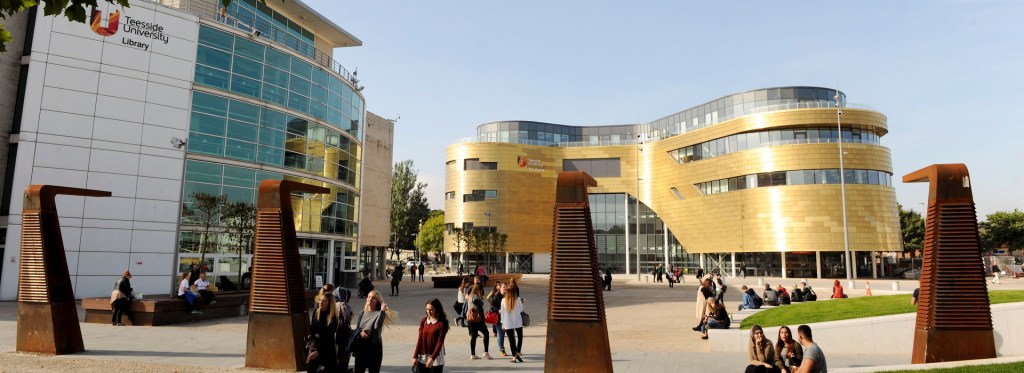
After 9 years (110 months) of personal and professional growth at Loughborough University, School of Design and Creative Arts (former School of the Arts, English and Drama), I am delighted to start a new chapter at Teesside University, School of Social Sciences, Humanities & Law, as Professor of Participatory Storytelling and Public Policy.
Campus Heart, The Curve & The Library, Middlesbrough
From the 5th of February, I am part of the leadership team for the Institute for Collective Place Leadership (IfCPL). This newly formed research institute brings together the School of Social Sciences, Humanities, and Law, Teesside University International Business School (TUIBS) and the School of Arts and Creative Industries (SACI). The institute responds to a key pillar of the university research strategy around ‘People and Place’. Academics and the PGR community work across three themes within the IfCPL: ‘Imaginative and Innovative Places’, ‘Empowered and Inclusive Places’ and ‘Sustainable and Resilient Places’. The IfCPL is built on principles of lived experience, empowering change through evidence-based solutions, and partnership and collaboration and local, regional, national and international levels. The strategic direction of TU research in this space recognises that regions are undergoing significant transition and transformation is required to alleviate ongoing social, cultural and economic inequalities while aspiring towards shared, inclusive and prosperous futures.
The IfCPL will provide academic leadership across all thematic areas, through its Director, Professor Natasha Vall and Research Director, Dr Kieran Fenby-Hulse.
It is now accessible online the video-recording of my presentation at the European Open and Digital Learning Week 2023, as part of the panel on Well-being, Heritage and Higher Education Learning chaired by Prof. Antonella Poce, University of Roma Tor Vergata, Italy.
You can watch it here 50′ from the start of the panel.
EODLW 2023 – Well-being, Heritage and Higher Education Learning (my talk 50′ from the start)
You can read the abstract below.
Social interaction between peers is an essential factor in the development of an inclusive practice within formal and non-formal Education, aiming at increasing individual and collective wellbeing. Starting from this premise, Digital Storytelling is presented here as a transformative educational approach, considering the key values of its original model and the flexibility of the various tools applied within this participatory practice. In particular, the use of museum objects, both in the physical and in the virtual space, is suggested as a way of prompting the storytelling process during the story-circle, while exploring personal connections with the object itself. This activity has proved to enhance creativity and collaboration in a context in which mutual learning and peer support are prioritised. Our experience suggests that the role of emotion in the digital storytelling process is central to the promotion of ‘embodiment’, a specific form of knowledge that exists in ‘the telling of stories with emotional meaning’. This extraordinarily rich meaning-making process facilitated in the various steps of the Digital Storytelling approach, that constantly interweaves the personal and the collective, finds its engine in the hyper segmentation of the conventional DS model and its many disruptions driven by co-creation.
 Antonia Liguori / Participatory Storytelling