Remembering Antonio Pennacchi: Storytelling, Disruption and the Courage to Hold Many Voices

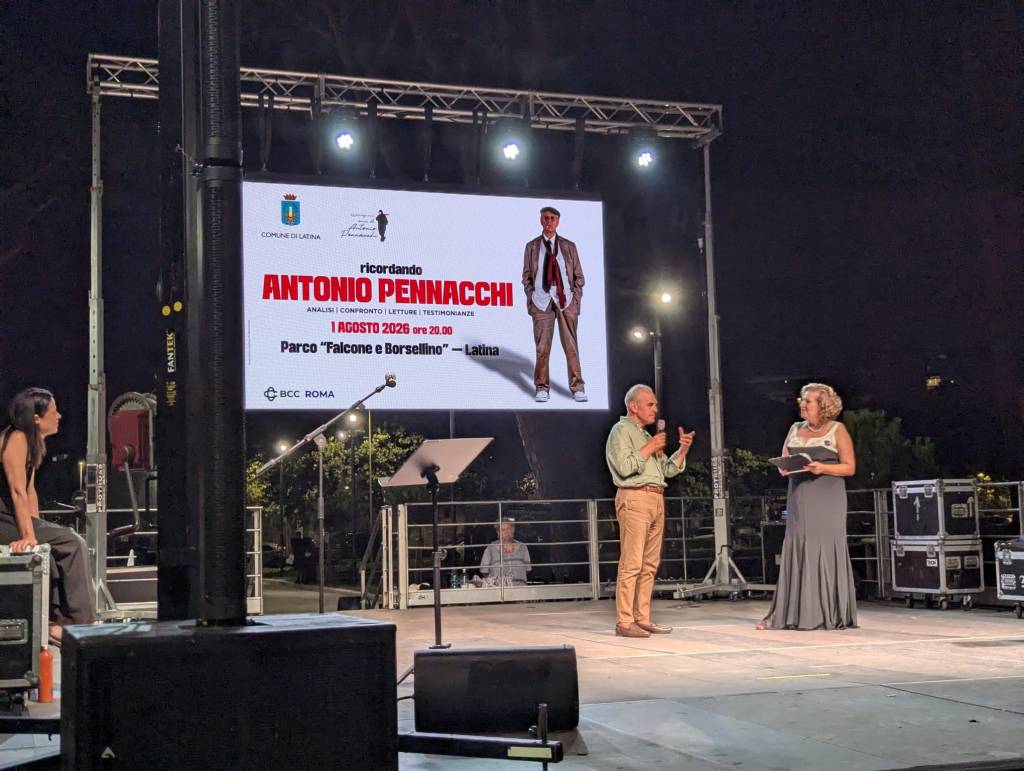
Yesterday, Pietro Antonelli and I returned to our hometown of Latina to take part in an event celebrating the life and legacy of Antonio Pennacchi, organised by Marco Ragonese, Graziano Lanzidei and “L’Associazione Amici di Antonio Pennacchi” and presented by Daniela Novelli. It was much more than a commemorative occasion. It was an opportunity to revisit a chapter of our lives and to remember a remarkable writer before he became one of Italy’s most celebrated literary voices.

Today, Antonio is rightly remembered as the winner of the prestigious Premio Strega for Canale Mussolini and as one of the writers who most profoundly explored the complexities of Italy’s twentieth-century history. Yet our memories go back to a different time, when his extraordinary talent was already unmistakable but had not yet reached the wider public.

Pietro Antonelli remembering Antonio Pennachi’s years at “La Piazza”

Those years were formative for many of us.

Pietro, then Founder and Editor-in-Chief of La Piazza and later Il Settimanale di Latina, recognised Antonio’s distinctive voice and invited him to collaborate with the newspaper. Between 1999 and 2001, Antonio worked with us as part of his journalistic practice, eventually obtaining his membership of the Ordine Nazionale dei Giornalisti. Long before literary prizes and national recognition, he was already writing with the uncompromising honesty and intellectual courage that would later define his novels.

Looking back, however, I realise that Antonio’s story cannot be separated from another story: that of La Piazza itself.

Under Pietro’s editorial leadership, La Piazza became far more than a local weekly newspaper. It evolved into a genuine civic space, a kind of intellectual gymnasium where journalists, writers, academics, artists, students and citizens could exchange ideas, challenge one another and engage with the issues shaping our territory.

Many people who would later contribute significantly to journalism, public administration, politics, education and cultural life found in those pages an opportunity to develop their voice. Some were experienced professionals, many were taking their very first steps. What united them was the possibility of experimenting, questioning assumptions and discovering that journalism is not simply about reporting events, it is about creating the conditions for public conversation.

Antonio fitted naturally into that environment.

His writing was never designed to reassure readers or reinforce established narratives. Instead, he constantly challenged inherited assumptions, inviting people to confront the contradictions embedded within Italian history and, in particular, within the identity of our own region. His articles often generated passionate debate and occasionally uncomfortable disagreement. Yet those discussions represented something invaluable: a community willing to engage with complexity instead of retreating into silence.

Antonia Liguori reflecting on Antonio Pennacchi’s role as a disruptor.

My own memories of Antonio are connected to another, rather unexpected story, one that reminds me how culture travels through seemingly random encounters.

In 2003, I was at the beginning of my academic journey, undertaking my PhD in History and Computer Science at the University of Bologna while also collaborating with Professor Clara Castelli at the University of Rome La Sapienza. Together, we organised a weekly Saturday seminar (as part of a module of History of Historiography) exploring the novel as a historical source, examining how literature can reveal dimensions of history that official archives and historical documents often cannot.

One week I suggested that one of the students read Antonio’s then relatively recent novel Il Fasciocomunista. At the time, Antonio was still largely known within literary circles rather than by the wider public. The student was deeply impressed by the novel and recommended it to her aunt and her aunt’s husband, who happened to be a film producer.

That simple suggestion created an extraordinary chain of events.

Continue reading “Remembering Antonio Pennacchi: Storytelling, Disruption and the Courage to Hold Many Voices”

The Art of Cultural Fluency: Exploring Digital Storytelling as a ‘Translational’ tool

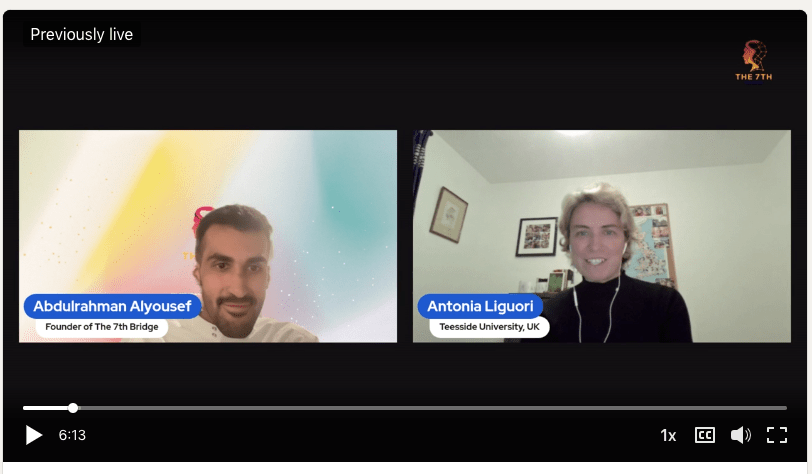
The video recording of my talk part of ‘The Art of Cultural Fluency’ event hosted by The 7th Bridge – a network of cultural heritage professionals based in Riyadh, Saudi Arabia – is now available on LinkedIn (from 6’10”) via the link below:

https://www.linkedin.com/events/theartofculturalfluency7240688618904682497/theater/

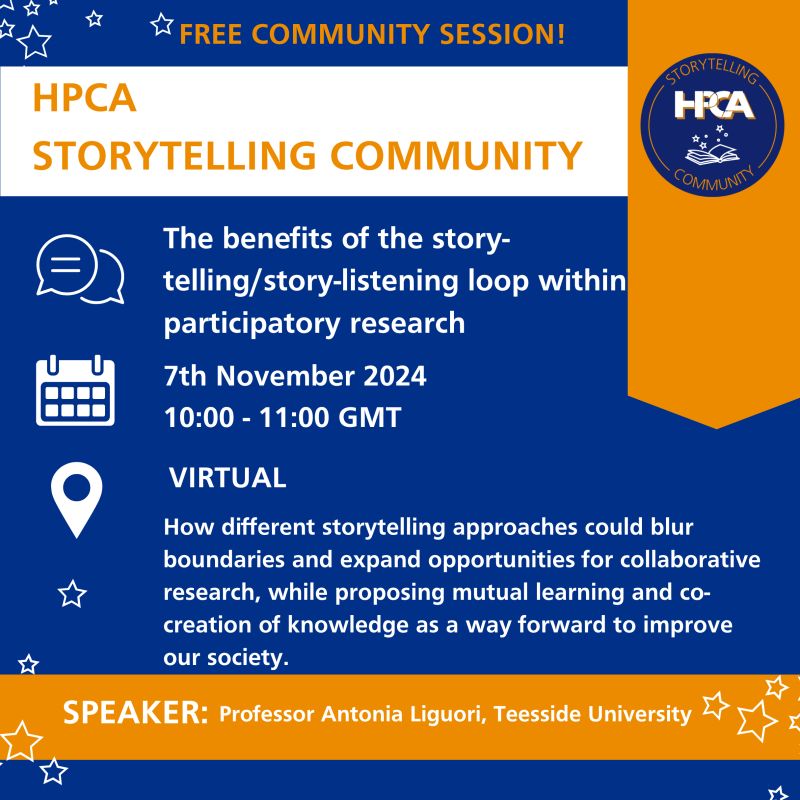
HPCA Storytelling Community Webinar -The benefits of the story-telling/story-listening loop within participatory research

I am delighted to join the Healthcare Project and Change Association – HPCA for the november webinar with a talk on “The benefits of the story-telling/story-listening loop within participatory research: exploring diverse experiences and methods for the co-production of knowledge”.

Please read the abstract below and register to this event via this link.

Storytelling has been defined as ‘the artform of social interaction’ (Wilson, 2021), not only for its inner dynamics, but also for its power to unlock grass-roots knowledge, explore dilemmas, develop community resilience, and engender change. In a time when academia and cultural institutions are being challenged to encourage broader engagement with diverse knowledges, practices that support shared knowledge and co-creation become important. Stories can generate empathy and trust among diverse communities and audiences and at the same time demonstrate their usefulness due to their power to give meaning to human behaviours and to trigger emotions (Bourbonnais and Michaud, 2018).

In this talk we acknowledge the existence of multiple truths when we recognise, as the Nigerian novelist Chimamanda Ngozi Adichie observes, ‘the danger of a single story’ (2009). As she describes, ‘because our lives and our cultures are composed of a series of overlapping stories, if we hear only a single story about another person, culture, or country, we risk a critical misunderstanding’. In a time of worrying ‘critical misunderstandings’ worldwide, this talk – linked to the soon to be published by Smithsonian Scholarly Press open access book ‘Story Work for A Just Future’ edited by Antonia Liguori, Philippa Rappoport, Daniela Gachago – explores the value of co-created “Story work”.

In particular, we will focus on how different storytelling approaches could blur boundaries and expand opportunities for collaborative research, while proposing mutual learning and co-creation of knowledge as a way forward to improve our society.

Key questions prompted by this talk are:

How do we make the digital storytelling practice further expand globally in a way that is both locally-tailored-led-owned, but also coherent with the original ethos?
Is co-creation an infallible antidote to exclusion and marginalization?
Can we determine when digital storytelling ends and a new practice starts, if they are based on the same ethos?

Everyday Creativity Conference: Exploring Musicking with a ‘Community Engineer’

Thursday 26th September Mike McGrother, Sally Blackburn-Daniels, Natasha Vall and I facilitated our first session to reflect on the emerging concept of ‘community engineering’ exploring musicking as an approach for community dialogue.

Our workshop was part of the very successful Everyday Creativity Conference, hosted by the AHRC Everyday Creativity Research Network and Creative Lives.

[In the photo of the Pre-conference dinner at the ‘Engineer’ from the left: Sally Blackburn-Daniels, Antonia Liguori, Mike McGrother, Natasha Vall]

This performative presentation has introduced Mike McGrother’s musicking practice as a co-created approach to enhance everyday creativity while exploring community’s sense of place in the Tees Valley. Starting with the premise that ‘the meaning of musicking lies in the relationships that are established between the participants by the performance’ (Small 1999), in this presentation we have explore ‘embodied listening’ (Giomi 2019) and the transition from personal to collective within the telling-listening loop (Liguori 2023) as a manifestation of everyday creativity and as a trigger for community-led placemaking.

We have also offered a platform for the audience to reflect on how to identify skills, approaches and tools that could support emergent ‘community engineers’ to replicate, adapt and expand existing practices.

Three songs were performed by McGrother – a song about, a song for and a song with – as stimuli to discuss the following three community projects, that offer new and nuanced understandings of community’s perspectives on placemaking and collective resilience:

The Speakeasy – a (generally) pub based open gathering of older people who, through sociable and musical intervention, reminisce and share their stories – reconnecting with their community and enjoying company.

Trailblazers, narrative focused walks with a musical edge that are co-created by people and enable stories to be shared.

Infant Hercules and The Haverton Hillbillies. Musical, sociable, and empowering ensembles that underpin and provide a collective voice for a community.

Across the three initiatives, over 1,500 community members were involved in the three Boroughs of Middlesbrough, Stockton-on-Tees, and Redcar & Cleveland.

This performative presentation has ended with a collaborative mapping exercise (see padlet below) to explore the potential impact of these musicking initiatives beyond their current regional reach and to challenge existing barriers for their replicability and longevity.