On Monday the 15th of June at 4pm CEST (3pm UK time), I have contributed to an international webinar hosted by the TransPath Project, exploring a topic that has been central to my research and practice for many years: storytelling as a transformative practice. This session brings together an interdisciplinary and international community to reflect on the relationships between people, water, and transformation, three deeply interconnected dimensions that invite us to reconsider how we engage with place, environment, and collective futures.
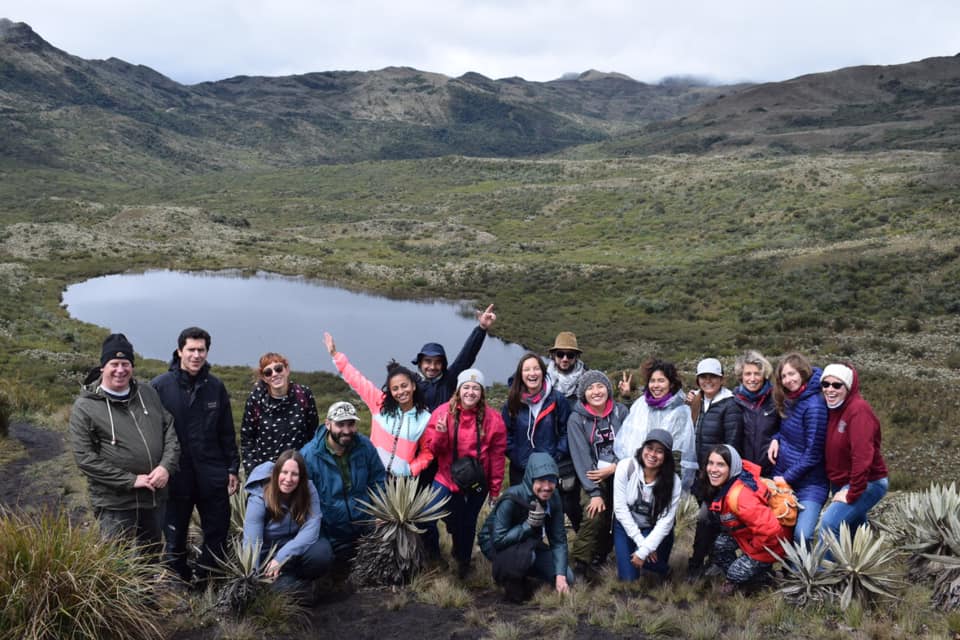
Photo from Antonia Liguori’s personal archive taken in Colombia during a PARAMO project workshop in 2019
Beyond storytelling as representation In much of my work, storytelling is not approached simply as a means of representation or communication. Instead, it is understood as a relational and participatory process that enables individuals and communities to make sense of their experiences, negotiate meaning, and imagine alternative possibilities. Storytelling becomes transformative when it:
Creates spaces for voice and listening, particularly for under-represented perspectives,
Supports co-creation and shared authorship, rather than extractive narratives,
Acts as a catalyst for reflection, dialogue, and action.
We’re excited to announce “The Uninvited Guest,” an innovative theatre performance that brings the lived experience of persistent pain into focus. Through a vibrant blend of comedy and storytelling, the production invites audiences to reflect on the realities of chronic pain – often invisible, always impactful.
Co-created by Theatre Space North East with Flippin’ Pain, Teesside University’s research team, and community members, and supported by the Arts and Humanities Research Council (AHRC) Impact Acceleration Account at Teesside University, “The Uninvited Guest” exemplifies how the arts and research can come together to deepen public understanding of health. By weaving together personal stories, academic research, and creative interpretation, this performance sheds new light on the personal, social, and emotional effects of chronic pain, challenging myths and opening up space for empathy and dialogue.
I am excited to highlight Riveting Connections: Exploring Multiple Perspectives for Place-Making Through Mike McGrother’s Musicking Practice, a powerful new documentary that shines a light on the transformative role of music in community building and cultural dialogue.
Through the lens of Mike McGrother’s innovative musicking practice, the film explores how music serves as more than just sound – it becomes a tool for creating meaningful connections, fostering inclusion, and reimagining the spaces we inhabit. This documentary invites viewers to consider how diverse perspectives can come together through creative practice to shape our shared environments.
Whether you are a community organizer, artist, educator, or simply someone passionate about music and social impact, Riveting Connections offers inspiring insights into the ways that music can enhance place-making and strengthen social bonds.
On the 30th of April we are facilitating our first digital storytelling workshop for the new project Flippin’ Pain through Storytelling funded by AHRC Impact Acceleration Account (IAA), Teesside University.
What is this project doing?
Persistent pain effects 30-50% of the UK and is the biggest cause of disability. Public misconceptions about pain are common and a significant barrier to good management leading to the development and maintenance of the condition. This project is seeking to address these public misconceptions by improving public understanding through Storytelling. We will organise Digital Storytelling workshops to support the co-creation of short films in which participants will reflect on their pain journey. These films will be shared at public events and on online platforms to increase public awareness on pain management by amplifying lived and living experiences of pain.
Why is it needed?
The Flippin’ Pain campaign – a key partner of this project – is both a national and regional award-winning public health campaign, collaborating with Teesside University to improve public understanding. The campaign has reached over 100,000 people through public engagement activities, but it has struggled to engage with people from more disadvantaged communities. This project will help to address this problem the campaign has been having.
Co-developing a Framework for Adaptive Participatory Storytelling Approaches (APSA)
Another paper just published from the DRY project, exploring how applied storytelling can support knowledge exchange and public engagement.
Please, read the abstract below.
The transdisciplinary Drought Risk and You (DRY) project aimed to interweave storytelling and science as a way of increasing the different voices and types of knowledge (specialist, local) within drought risk decision-making in the UK. This paper critically reflects on our emergent process of drawing across different methodologies to create Adaptive Participatory Storytelling Approaches (APSA). APSA enable more tailoring to people and setting than existing methods, recognizing the specificity of local risk contexts and communities, and in terms of social dynamics, cultural values and local knowledge. APSA are situated, storytelling methodologies applied in the social sciences and arts/humanities, giving strong attention to meaningful participation and sustainable coproduction in both process and outputs. The paper offers other researchers and practitioners insights into working with APSA as a suite of creative storytelling options prioritizing methodological principles of active listening and adapting. APSA require creative thinking along multiple spectra, including how to balance different axes in APSA including: topic (drought risk)-focused with topic (drought risk)-peripheral or oblique, participant-led with researcher-led, and visualization-led with audio-led. We reflect on the challenges, opportunities and values of co-working with APSA, and offer a flexible framework for its application and iterative evaluation embedded through the process. We propose this as a starting point for other transdisciplinary projects to tackle themes that prove difficult for communities to connect with during community-engaged research, in this case, hidden risks like drought and climate change. This is timely given the power and mounting popularity of storytelling for behavior change, research insight and policy, and the need to capture and share different knowledges for climate resilience.
Please, cite as: Roberts, L, Liguori, A, McEwen, L, Wilson, M. (2023). The challenge of engaging communities on hidden risks: co-developing a framework for Adaptive Participatory Storytelling Approaches (APSA), Journal of Extreme Events, ISSN: 2345-7376. DOI: https://doi.org/10.1142/S2345737623410026