Being Human Festival in Middlesbrough: Bridging Past and Future through Digital Storytelling

On Monday the 28th of October from 12:00 to 14:30 we will meet at the Transporte Bridge Visitor Centre in Middlesbrough and we’ll experiment with collective story-listening to interpret and showcase stories of this iconinc local landmark.

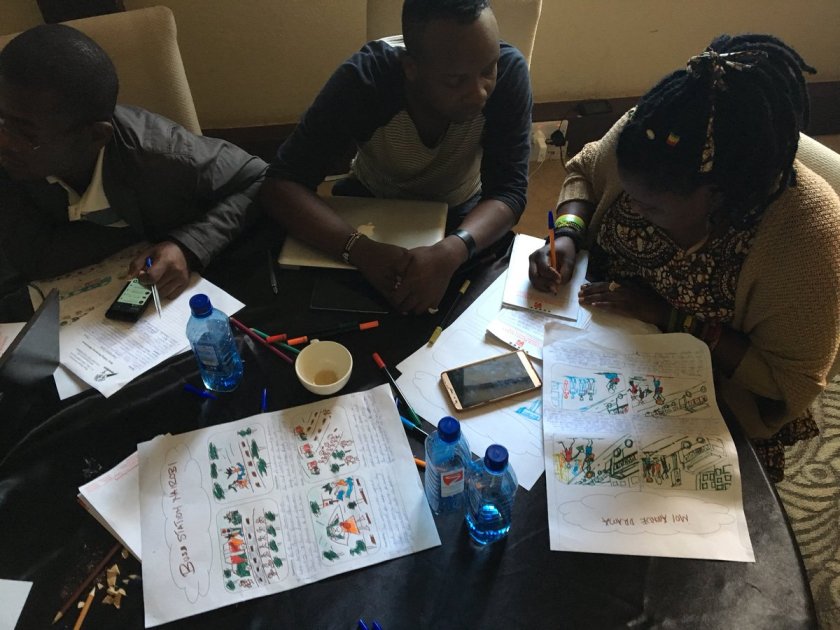
In this pre-Being Human Festival event, we draw inspiration from this still impressive bridge that has been a prominent feature of the Middlesbrough skyline since 1911 and a place for memories and encounters. Reflecting on the bridge’s symbolic significance and historical importance, participants will engage in small group storyboarding sessions to capture memories of the past and envision the region’s future.

You can register to this event on the Beign Human Hub page via this link.

Guided by Antonia Liguori and Sally Blackburn-Daniels, participants will collaboratively create an imaginative timeline, which will be featured in a public exhibition and celebration at the Transporter Bridge Visitor Centre on Saturday, the 16th of November.

This event is part of the Teesside University Being Human Festival Hub.

We, The Story: 1st International Digital Storytelling Festival – Zakynthos 2024

The submission deadline has been extended until the 15th of May.

As a member of the organising committee, I am delighted to share the official announcement of the 1st International Digital Storytelling Festival, hosted in Zakynthos, Greece, from the 27th to the 29th of September 2024.

You can dowload the announcement from the Festival website.

With the aim of raising discussions about important themes affecting us all, we invite digital storytellers to take part in this festival and to submit stories in relation to the following themes:

  • Culture
  • Education
  • Environment
  • Health
  • Science and Research
  • Society

Ten digital stories will be selected for each theme to be screened during the Festival. These stories will be selected by the relevant Festival Committee (an international team including Digital Storytelling experts, Theme experts, and Artists) using the principles of inclusion regarding age, gender, geographical region, and language. Moreover, the relevant Festival Committee for each theme will select a representative focal digital story to be screened at the end of the festival to attract attention to a global issue in relation to the theme. This story will also be granted the Festival Award for this theme. During the Festival, the screening of these stories will be accompanied by a theme-focussed discussion panel.

I will be part of the jury for the theme ‘Environment’.

The official and warm welcome from Teesside University: “Meet Professor Antonia Liguori”

I recently joined Teesside University, in the UK, as Professor of Participatory Storytelling and Public Policy and the wonderful Comms Team just created this great video to summarise my research.

You can read the post on the University website via this link: https://www.tees.ac.uk/sections/news/pressreleases_story.cfm?story_id=8500

And you can see my research profile here: https://research.tees.ac.uk/en/persons/antonia-liguori

Interactive workshop in Sydney: The role of place-based participatory storytelling to explore contested stories

Thursday 28 March, 11am – 1pm, I’ll be facilitating an interactive participatory storytelling workshop at Western Sydney University, School of Humanities & Communication Arts and Writing & Society Research Centre, Parramatta City Campus, Level 7, Rm PC.1.7.78

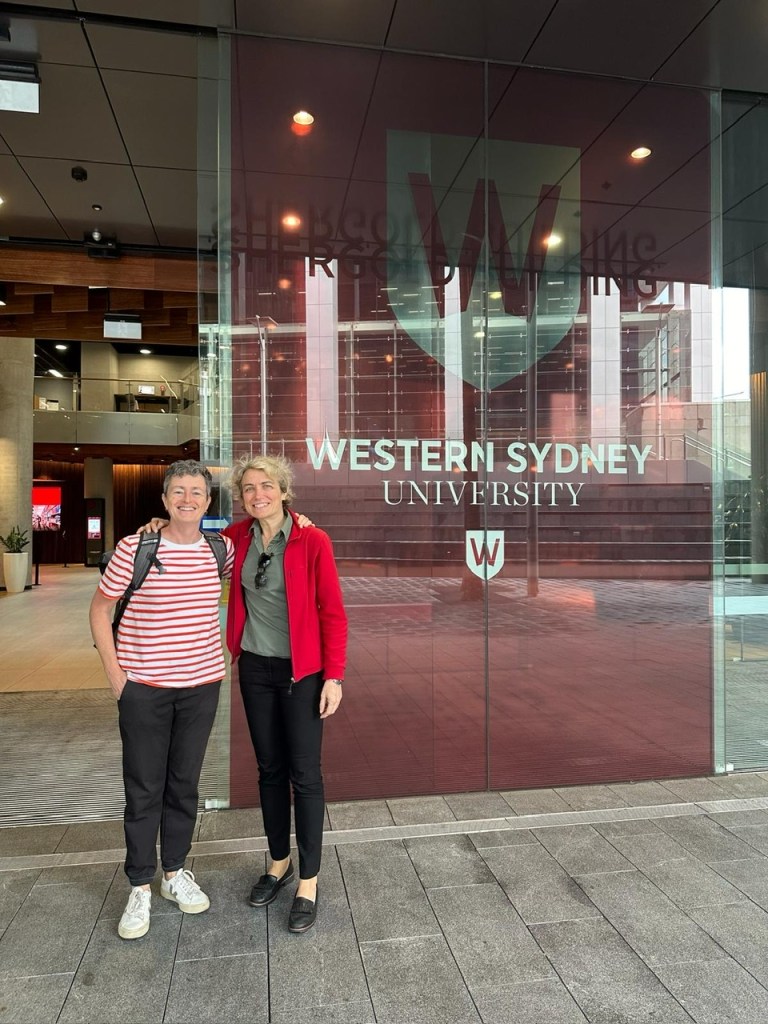
Antonia Liguori with Alison Barnes at Western Sydney University

Please, join us if you are in the area!
You can read more information here.

Storytelling helps us unfold the ‘bricolage of the here’ and explore the ‘mess’ of human interactions in a specific place. Stories emerge from individual memories and build shared knowledges. As they convey values and emotions, they are very effective in revealing the differences and similarities between people’s experiences (East, Leah et al. 2010). When those experiences are linked to a particular context, stories become a magnifier of people’s sense of place.

This interactive workshop aims at introducing the concept of place-based participatory storytelling and at exploring how to adapt the 5-step Digital Storytelling model to co-create alternative narratives prompted by the places experienced in our everyday life.


The activity will last 2 hours and will include:
– An exploration of various theories and practices within participatory storytelling
– A presentation of StoryCenter Digital Storytelling model
– A reflection of the effectiveness of creative disruptions to the
conventional model
– A collaborative storyboarding activity
– A collective reflection on the use of storytelling techniques to magnify people’s sense of place.

You can book your place via this link:

https://events.humanitix.com/participatory-storytelling-workshop

New publication: “Gentle Disruptions”: A Critical Reflection on Participatory Arts in Expanding the Language System for Meaningful Community Engagement Around Local Climate Adaptation

In this piece we reflect on our process of coming together as an interdisciplinary and inter-professional team to challenge pre-conceived meanings and assumptions when ‘talking about’, ‘designing’ and ‘doing/facilitating/delivering(!)’ community engagement activities around environmental issues.

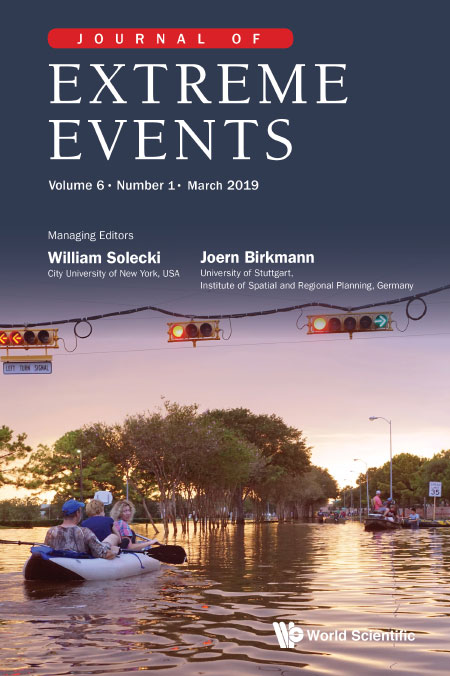
You can read the abstract below and download the open access article via this link: https://www.worldscientific.com/doi/10.1142/S2345737624500015

This paper proposes a critical reflection on the use of language to address the challenge of promoting and supporting civic agencies in adaptation to increasing extreme weather risk. Such reflection needs to focus on the opportunities and limitations of language, and the navigation amongst multiple or contested meanings within interdisciplinary and inter-sectorial collaborations. This commentary was inspired by the authors’ conversations on their journey in writing the paper — Liguori et al. (2023) “Exploring the uses of arts-led community spaces to build resilience: Applied storytelling for successful co-creative work” and the impact it had on their understanding of various language systems. Here writing was conceived as a form of networking, undertaking a sequence of intimate, in-depth discussions in a safe space. ‘Playing’ with words, moving out from our disciplinary homes, provided a fertile way of thinking within multi/inter-sectorial/disciplinary conversations to expand the language system for meaningful community engagement around local climate adaptation. Three key terms were at the core of these diverse — and sometimes divergent — ways of looking at social preparedness for extreme weather events: disruption, empowerment, and creative ecosystem. The meta-reflections, based on iterative conversations around these three key terms, highlight the importance of explorations of language as a generative meaning-making process that can be boundary-spanning.

There is significant value in understanding the implications of language used in public engagement — its different interpretations, their loading and potential for transformed thinking when conceived creatively. Such insight can contribute to more effective approaches for participatory research and practice working with communities when addressing issues related to climate adaptation. This commentary argues that the socially engaged or participatory arts are particularly well placed to be active in such processes.