“Storytelling and Story-listening to create change”: Opening the Series 5 of the Change Stories podcast with Susanne Evans

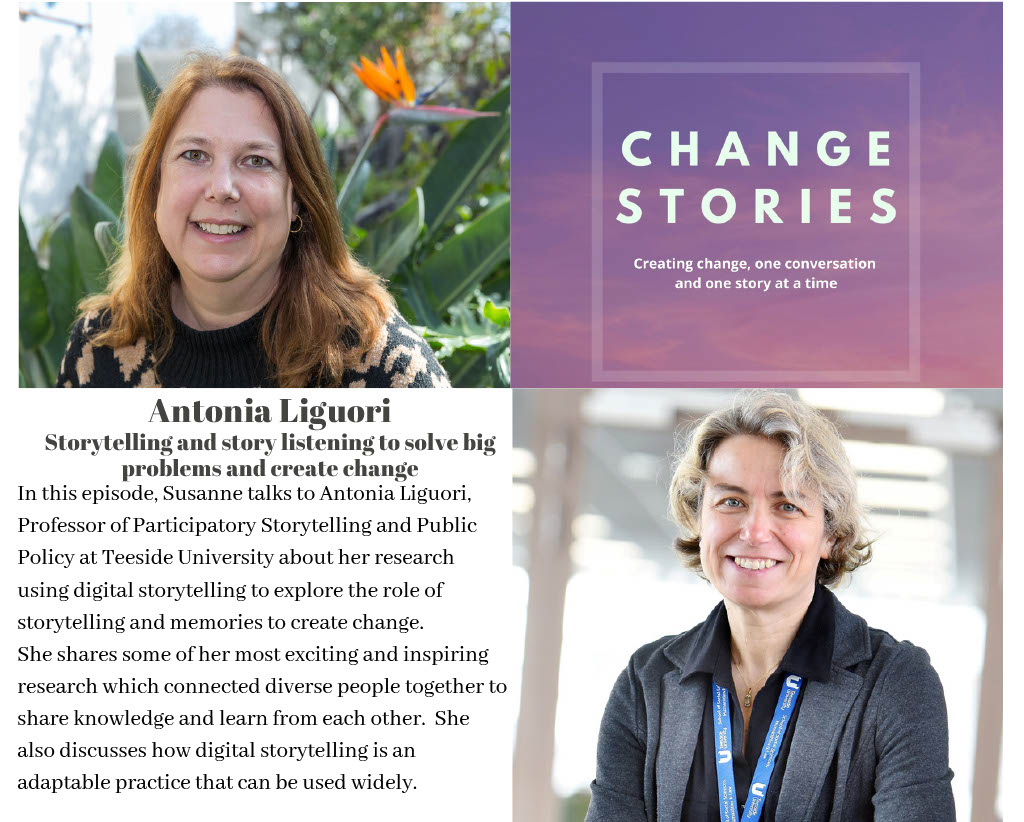
The ChangeStories podcast is for people who are interested in change, whether that is within organisations or for individuals.

Hosted by the brilliant Susanne Evans, an organisation change consultant, coach, trainer and researcher, each podcast episode features a conversation with a guest about their work to provide ideas and inspiration.

I had the joy to be the first guest of the opening of the Series 5 of this successful podcast and to share ideas storytelling and story-listening to address big problems and generate change.

You can listen to my conversation with Susanne Evans here:

And on YouTube:

Digital Storytelling as an evolving practice – Smithsonian Education Summit

This short video was recorded by Prof. Antonia Liguori, Teesside University, UK, as part of a Digital Storytelling workshop delivered by Philippa Rappoport (Smithsonian Office of Educational Technology), Sara Ducey and Matthew Decker (Montgomery College) at the Smithsonian Education Summit 2024.

Digital Storytelling as an evolving practice – Smithsonian Education Summit 2024

The Smithsonian’s fourth annual National Education Summit took place from the 16th to the 18th of July 2024. This year’s theme, “Together We Thrive: Connecting at the Intersections,” emphasises the power of interdisciplinary approaches to effectively engaging students with complex and challenging content.

The free three-day event combined virtual and in-person sessions, including keynote speeches, workshops and behind-the-scenes experiences at various Smithsonian locations. Sessions led by Smithsonian educators and collaborating partners explored relevant themes at the intersections of art, culture, history and science across four main tracks: Using Art to Connect Past and Present, Inclusive Storytelling, Thinking Globally, Acting Locally and Youth Taking Civic Action. 

A companion Smithsonian Learning Lab collection was created to facilitate the workshop Story Work to Increase Engagement and Empathy, which this video is part of, and it is accessible via this link.

#DRS2024 – Developing A Tool To Empower The Disempowered: The Components Of The Feeling Of Home

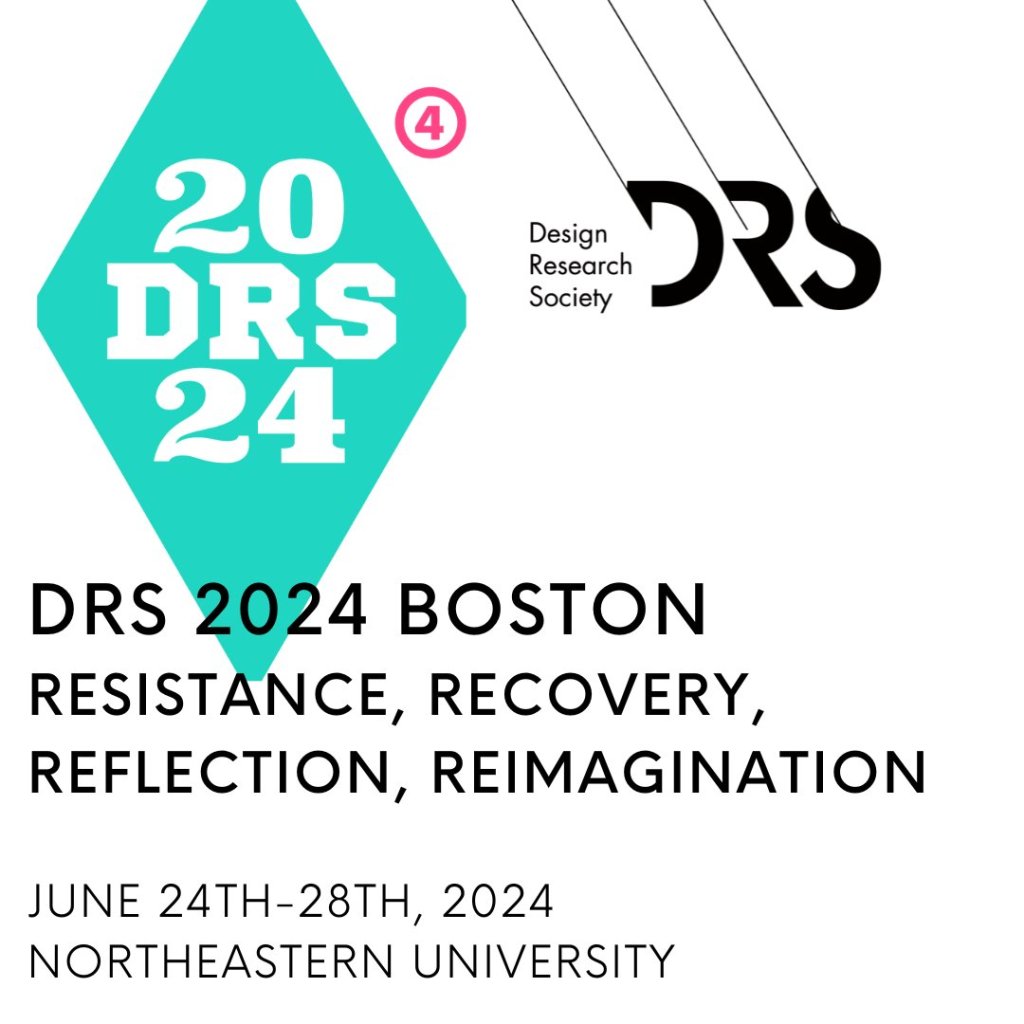
Led by the brilliant Eszter HegymegiLoughborough University, UK, this paper was presented at the Design Research Society international conference, hosted by the College of Arts, Media, and Design at Northeastern University, in Boston from the 24th to the 28th of June 2024.

You can read the abstract here.

The rate of homelessness is rising, resulting in a need for better-designed services to support those affected. Building on the sector’s acknowledgement that personalised support is needed to reverse this trend and based on the psychological concept of the emotional home, we propose a tool that helps those experiencing housing issues feel empowered to better express their housing needs to support teams. The tool breaks down the complex concept of ‘home’ into tangible components of the feeling of home, developed through qualitative studies. Here, we discuss the process of working in partnership with a local charitable service provider to refine the components, and we present the tool’s initial assessment and potential to mitigate the inherited power dynamics in a situation where help is provided for vulnerable individuals. This research will be helpful to those involved in the design of services to support vulnerable people affected.

You can download the full paper via this link and on the DRS Digital Library: https://dl.designresearchsociety.org/drs-conference-papers/drs2024/researchpapers/56/

Story-mapping in Tuscany

At the end of May I was invited by SART – Siena Art Institute to join their team and co-design/facilitate storytelling workshops to explore with young people their ‘connection’ with the places where they live.

We have used and adapted a series of participatory techniques to re-imagine youth engagament in regional future planning.

You can see below a few images taken during our first workshop in Montalcino.

And here a short video that we recorded on the way to explain in a few words how storytelling can be applied as a platform for social dialougue and mutual learning.

“The benefits of the story-telling/story-listening loop within participatory research” – online the video recording of the seminar in Wellington

The University of Otago, New Zealand, just published on their YouTube channel the video recording of one of the seminars I gave during my visit in April.

Seminar hosted by the University of Otago, Wellington, New Zealand, April 2024

You can read the abstract of the presentation here:

The benefits of the story-telling/story-listening loop within participatory research

Participatory storytelling is an enriching and powerful research approach that enables the researcher and the participant to shift power dynamics and establish new ways of working to achieve (together!) more meaningful and long-lasting results. Storytelling is an effective way for people to connect, share knowledge, and generate change. Even more when the story-telling/story-listening loop is prioritised during this creative process. As our world becomes more diverse, it is crucial for academia and cultural institutions to promote engagement with different perspectives. Stories have a unique power to build empathy, trust, and understanding among communities. However, it is important to recognise that there isn’t just one truth or perspective. Like Nigerian author Chimamanda Ngozi Adichie says, “relying on a single story can risk a critical misunderstanding”.

In this seminar, we’ll explore the concept of co-created “Story Work” and how it involves collaborating to create stories that reflect diverse experiences and truths. We’ll also look at how storytelling can be used in research to foster engagement and inform practice and policy.

This seminar aims to address these questions:

How can digital storytelling be adapted globally while staying true to local values?

Is collaborative storytelling a solution to exclusion and marginalisation?

How do we differentiate between different storytelling practices while maintaining their ethos and core principles?