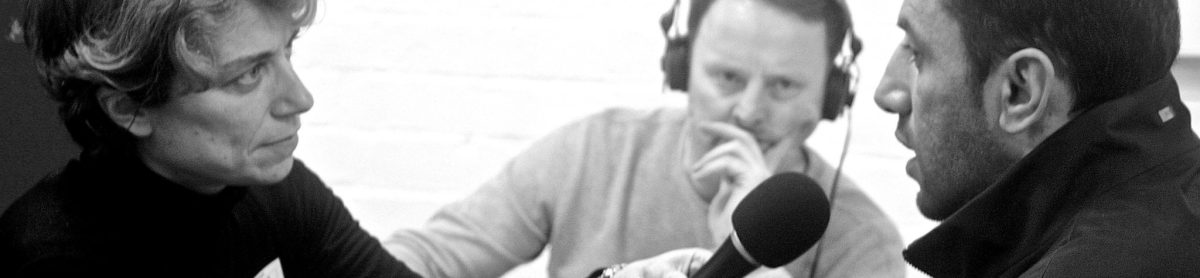
I recently joined Teesside University, in the UK, as Professor of Participatory Storytelling and Public Policy and the wonderful Comms Team just created this great video to summarise my research.
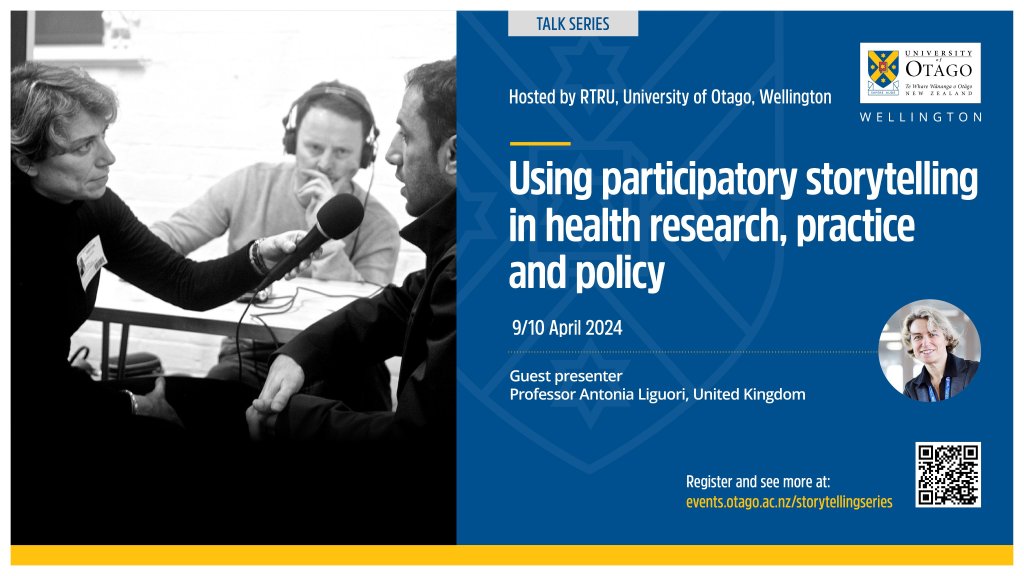
Thrilled to be in Wellington, New Zealand, for a series of storytelling seminars hosted by Otago University and to finally meet in person the brilliant Dr Hemakumar Devan and his colleagues to learn more about their inspiring work on the HRC Whānau opioid stories project, exploring the use of participatory storytelling for a more “holistic” and culturally appropriate approach to chronic pain.
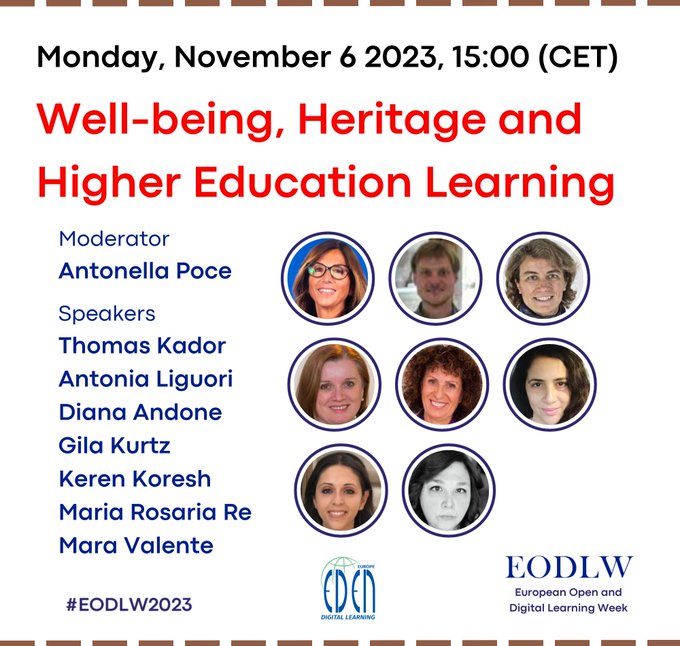
It is now accessible online the video-recording of my presentation at the European Open and Digital Learning Week 2023, as part of the panel on Well-being, Heritage and Higher Education Learning chaired by Prof. Antonella Poce, University of Roma Tor Vergata, Italy.
You can watch it here 50′ from the start of the panel.
EODLW 2023 – Well-being, Heritage and Higher Education Learning (my talk 50′ from the start)
You can read the abstract below.
Social interaction between peers is an essential factor in the development of an inclusive practice within formal and non-formal Education, aiming at increasing individual and collective wellbeing. Starting from this premise, Digital Storytelling is presented here as a transformative educational approach, considering the key values of its original model and the flexibility of the various tools applied within this participatory practice. In particular, the use of museum objects, both in the physical and in the virtual space, is suggested as a way of prompting the storytelling process during the story-circle, while exploring personal connections with the object itself. This activity has proved to enhance creativity and collaboration in a context in which mutual learning and peer support are prioritised. Our experience suggests that the role of emotion in the digital storytelling process is central to the promotion of ‘embodiment’, a specific form of knowledge that exists in ‘the telling of stories with emotional meaning’. This extraordinarily rich meaning-making process facilitated in the various steps of the Digital Storytelling approach, that constantly interweaves the personal and the collective, finds its engine in the hyper segmentation of the conventional DS model and its many disruptions driven by co-creation.
For the European Open and Digital Learning Week organised by EDEN DLE, I was invited to deliver a talk as part of an exciting panel discussion (on Monday the 6th of November at 3pm CET) facilitated by Prof. Antonella Poce, University of Roma Tor Vergata, Italy.
The panel explores how we promote wellbeing within the university context and what role could the use of technology and heritage play. The session, through the participation of seven experts from different European and non-European institutions, aims to investigate research experiences in the field of promoting and evaluating wellbeing in formal Higher Education contexts, especially through the use of heritage and technology as educational tools.
The title of my presentation is: Digital Storytelling with museum objects: exploring the benefits of co-creation within diverse learning communities.
If you want to join us, please, register via this link.
Our latest Open Access publication is inspired by the panel we delivered at the International Digital Storytelling Conference in the Washington D.C. and Baltimore areas, US, in June 2023.
Please, read the abstract below.
A new, hybrid way of conceiving Digital Storytelling (DS) in applied research is presented here as an essential trigger to challenge, expand, and eventually re-frame the way in which DS is currently codified. The three methodological perspectives described in this paper share a common understanding of practice-as-research. They position themselves within three distinct disciplines—illustration, animation, and the creative arts in education—but have a strong commitment to interdisciplinarity. Each of them is trying to respond to a specific cultural and personal issue (e.g., sense of identity, mental health, attainment within competitive environments, etc.) and also serves as a prompt to reflect on a potential new aspect of DS as research, linked to the how, the what, and the why of these multiple and complementary applications. The intention of this paper is not to propose one alternative way of operating, but to inspire other researchers wanting to apply this approach in their work to constantly challenge any pre-conceived form and process, while prioritizing the democratization of knowledge production and informing their research process with co-design and participatory principles. The take-away message from these three case studies is that DS will be, in fact, embraced by the new generations of researchers as a sustainable practice all the more, as its many disruptions will generate spaces for co-creation and self-representation to emerge, and will stimulate everyone involved in the research process to challenge their own way of thinking and to go beyond what was codified by others and by their own practice too.
Please, cite as: Liguori A, Sung KJ, McLaughlin L, Stuttle J. What Digital Storytelling Means to the New Generation of Researchers. Social Sciences. 2023; 12(9):485. https://doi.org/10.3390/socsci12090485