The Listening City: Digital Storytelling as a Tool for Place-making

The Listening City is a collaborative interdisciplinary project that aims to explore Digital Storytelling as a tool for place-making and as a community-building approach to inspire dialogue and mutual understanding across diverse groups within an urban context. As stories convey values and emotions, they are very effective in revealing the differences and similarities between people’s experiences (East, Leah et al. 2010). When those experiences are linked to a particular context, stories become a magnifier of people’s sense of place.
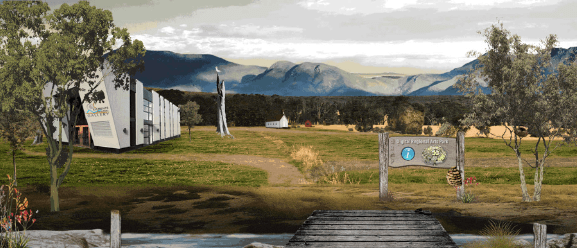
Within this project Bredäng, a public housing neighbourhood South of Stockholm, and Mälarhöjden, the garden neighbourhood, were selected as case study areas, considering their very different socio-economic status, despite being divided only by a tunnel.

The Listening City: Digital Storytelling as a Tool for Place-making. AMPS Conference 2023

The project team consisted of a group of landscape architects from Landskapslaget, Sweden, an academic with a background in History and Computer Science from Loughborough University, UK, a storyteller from Kenya, and representatives from the City of Stockholm. Within the context of this project, the team conceived digital storytelling as “a means of sharing knowledge, building trust, and cultivating identity” (Cianca et al 2014) and interpreted stories as a sort of “holistic thinking” (Meadows, 2009).

The team has in particular looked at how applied storytelling could enable the two communities on the two sides of the tunnel to come together, dismantle social barriers and turn a neglected space into a place of joint belonging.

Antonia Liguori, Pia Jonsson and Daniel Onyango are presenting this project at the AMPS Conference 2023 in Prague, a conference on Culture, History, Art and Design.

New publication: Participatory Action Research in Digital Storytelling: Using Mobile Technology to Co-Create Social Change in Kenya

A real privilege to be part of this fascinating book on Co-teaching/co-research in contexts of inequality

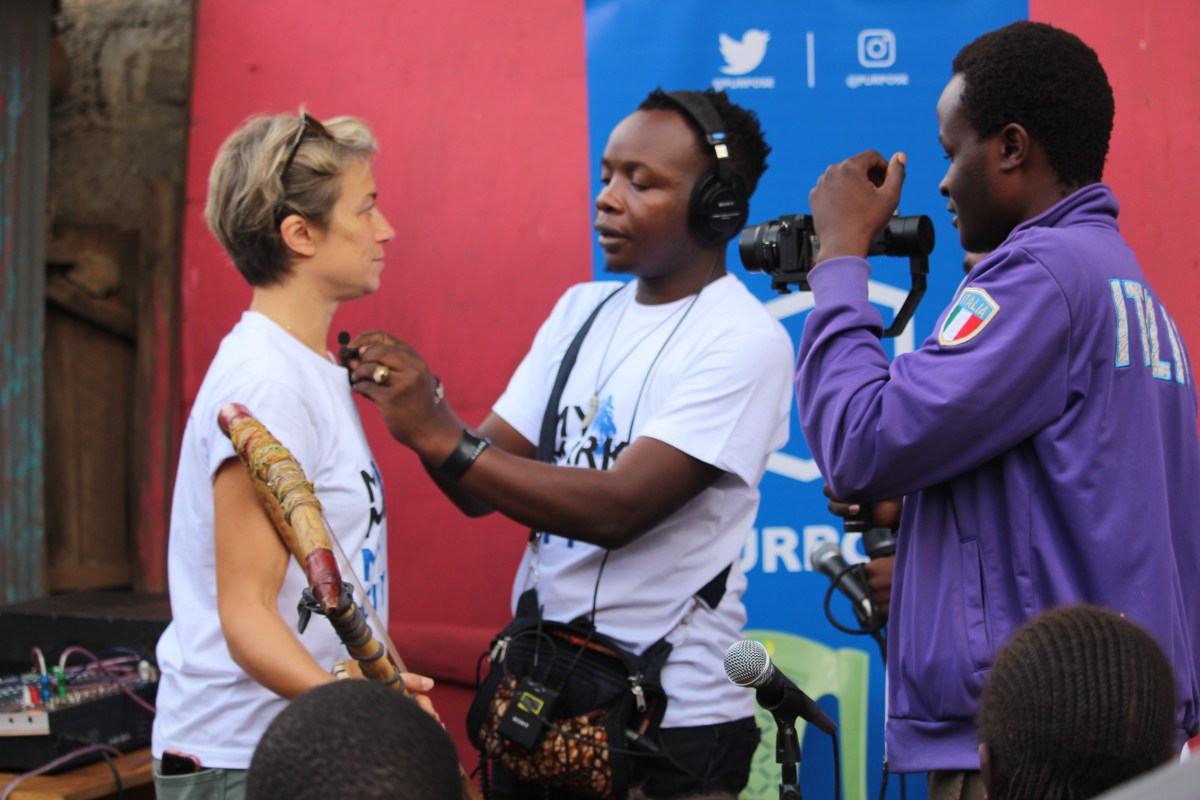
This chapter reflects on the outcomes of an ongoing transnational partnership between Hope Raisers, a youth-led NGO based in Korogocho slum in Nairobi, Kenya, and the Storytelling Academy at Loughborough University in the United Kingdom (UK). A group of researchers and artists explore the value of digital storytelling as a tool for participatory action research (PAR) through an exploration of the challenges and opportunities of applying this tool to facilitate online and face-to-face conversations.

The focus is around issues of global interest from a local and personal perspective. A number of case studies are discussed to demonstrate the impact of a digital storytelling mobile lab, via PAR, on a group of stakeholders including community members, Nairobi-based artists and UK-based researchers. The case studies recount the processes of exploring hybrid forms of storytelling (digital and performative) to co-design a public event focused on waste management and to develop community-led solutions to the design of urban spaces. The methodological, social and cultural challenges faced while applying PAR approaches to facilitate the digital storytelling process are addressed.

There is critical reflection on the ways in which workshop participants and other storytellers were supported in shared, collaborative and asynchronous projects from different, non-traditional learning locations. Through this, it is demonstrated that, while PAR approaches promote social justice, there are a number of ethical dilemmas to tackle and protocols to develop. In this way the authors share different ways of applying a culturally appropriate and practical PAR approach to address societal issues and create social change.

This chapter is part of the fascinating book Co-teaching/co-research in contexts of inequality: Using networked learning to connect Africa and the world available open access via this link.

Mental health and wellbeing: DS Toolkit for peer support

An exciting collaboration between young people, researchers and Mental Health Foundation UK.

A Digital Storytelling Toolkit was co-designed by a group of teen-agers and a team of researchers from the Storytelling Academy (Loughborough University) led by Antonia Liguori, in collaboration with Mental Health Foundation UK.

The Digital Storytelling Toolkit has been designed to help young people have better conversations around mental health and wellbeing.
Using insights we gained during a series of six storytelling workshops with students ages 13-16, researchers from Loughborough University have developed this resource to help young people talk about mental health and wellbeing in smaller groups.

When done mindfully, discussing the provided materials and prompts in groups can help them improve their sense of connection and belonging, as well as their self-awareness.

You can access the Digital Storytelling Toolkit via this link: https://digitalstorytellingtoolkit.uk/

This collaboration was supported by the Erasmus+ project SOLIS – DEVELOPING WELLBEING AND SOCIAL INCLUSION

Digital Storytelling as an assessment tool

If you are thinking to apply Digital Storytelling in formal Education, this article might give you something to think about.

In the Winter of 2019, I was invited to facilitate a digital storytelling workshop for educators in Maryland, in US, hosted by the Montgomery College and organised in collaboration with the Smithsonian Institution. It was supposed to be just one of the usual ‘train the trainers’ sessions, in which we explore with colleagues from various disciplines how to effectively adapt the conventional StoryCenter Digital Storytelling model in Higher Education. But that time, exploring barriers and opportunities of applying digital storytelling as assessment tool triggered something different in my way of thinking about my own digital storytelling/teaching practice and also had a long-lasting impact on that HE institution. Since then, a community of practice was created at the Montgomery College to reflect within their academic community on how to best apply this creative practice within formal education; and I became more active in supporting colleagues in my own institution to include digital storytelling in their assignments. 3 years (and a pandemic) after that workshop, we have now, at Loughborough University, undergraduate and postgraduate students producing a digital story to be assessed on various subjects within Design, Creative Arts and Data Science. We mainly apply it as a reflective practice to slow down their learning process, dive deeper in their understanding of the subject and use the lens of creativity to expand and cement their meta-learning experience.

What was obvious during that workshop in Maryland was a general need felt by colleagues from various disciplines, spanning from Anthropology to Nutrition, to re-shape their assessment in a way that would make it a meaningful and integral part of the learning process and not just the end point. While we were exploring how to structure a module in a way that could include time for the practical sessions implied in the digital storytelling process, a History Lecturer said something that is still engraved in my mind: “we need people interested in learning and not intimidated by learning”. And then another colleague added: “Digital Storytelling gives students permission to be a creator of knowledge and not just an information receiver”. Those two simple comments summarized in two sentences very clearly why digital storytelling, when used as an assessment tool that values both the process and the output, can enhance the learning experience: the two key aspects that differentiate this approach from others are in fact the freedom to create, and the opportunity to find and select (slowly and through various languages, i.e. visual, verbal, written, performative, audio) what makes each student interested in a particular subject.

Many academics from that workshop in early 2019 now recognise digital storytelling as a high-impact practice as well as an assignment grounded in inclusivity, in particular for students of diverse educational backgrounds and aptitudes who can find inspiration and recognise their own successful learning in the digital story production process.

The challenge for educators is investing time and energy to understand how to adapt the conventional digital storytelling model for the benefit of their students and in respect of the academic standards of their discipline. And this implies creativity in our way of thinking too.

* This article was published by Media & Learning: https://media-and-learning.eu/type/featured-articles/digital-storytelling-as-an-assessment-tool-embedding-evaluation-in-the-learning-process/

You might be interested in this video-interview on Digital Storytelling as Assessment Tool: A conversation with Fred Dalmasso.