MeltingPro just published on their YouTube channel the recording of my webinar on AI-Powered Storytelling in which I am sharing some emerging ideas from a collaboration with the Making of Black Britain and London Trasport Museum within the context of storytelling as anti-racist teaching pedagogy. The webinar is in Italian.
Storytelling partecipativo e IA – Webinar DICOLAB Cultura al digitale, May 2025
After almost a decade of hands-on workshops and ongoing research together, Philippa Rappoport (from the Smithsonian Office of Educational Technology) and I were invited to write an article for the Smithsonian Magazine to share the power of digital storytelling as an approach that makes learning more personal, emotional, and impactful.
Plus, don’t miss our online session at the 2025 Smithsonian National Education Summit on Tuesday, July 15 at 12:00pm, Eastern. Check out the session line-up and register for free today: https://smithsonianeducation.swoogo.com/ses2025/home
Delighted to co-author this paper with two brilliant colleagues and friends from Loughborough University and the Institute for Creative Futures LU London, Valentina Volpi and Ksenija Kuzmina, who will be presenting our paper at the Sport Anthropology Conference 2025, whose theme this year is “Sport Beyond Definitions”.
The paper is inspired and informed by the work we are developing together through participatory digital storytelling and co-design with young people in Bangladesh, Jordan, and Fiji, at the intersection of climate displacement and sport.
On the 30th of April we are facilitating our first digital storytelling workshop for the new project Flippin’ Pain through Storytelling funded by AHRC Impact Acceleration Account (IAA), Teesside University.
What is this project doing?
Persistent pain effects 30-50% of the UK and is the biggest cause of disability. Public misconceptions about pain are common and a significant barrier to good management leading to the development and maintenance of the condition. This project is seeking to address these public misconceptions by improving public understanding through Storytelling. We will organise Digital Storytelling workshops to support the co-creation of short films in which participants will reflect on their pain journey. These films will be shared at public events and on online platforms to increase public awareness on pain management by amplifying lived and living experiences of pain.
Why is it needed?
The Flippin’ Pain campaign – a key partner of this project – is both a national and regional award-winning public health campaign, collaborating with Teesside University to improve public understanding. The campaign has reached over 100,000 people through public engagement activities, but it has struggled to engage with people from more disadvantaged communities. This project will help to address this problem the campaign has been having.
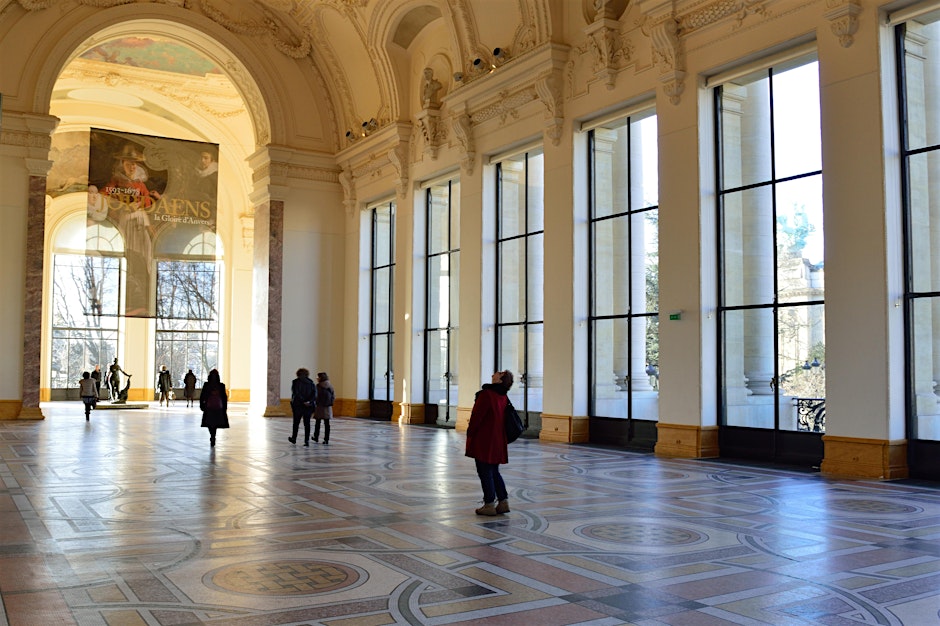
As a member of the Advisory Board, I will join the Digital-Spektrum project team for a workshop at the Petit Palais in Paris, on Friday 24 January from 14:00 to 17:00 CET, to explore Digital Storytelling as an inclusive approach for audience engagement.
The priority of the Digital-Spektrum project is to promote inclusion, diversity, and accessibility in all areas of education, particularly educational experiences that take place in museums. One of the main objectives of the Digital-Spektrum project is to provide museum staff with digital skills to design inclusive museum experiences with and for people with Autism Spectrum Disorder (ASD).

 Antonia Liguori / Participatory Storytelling