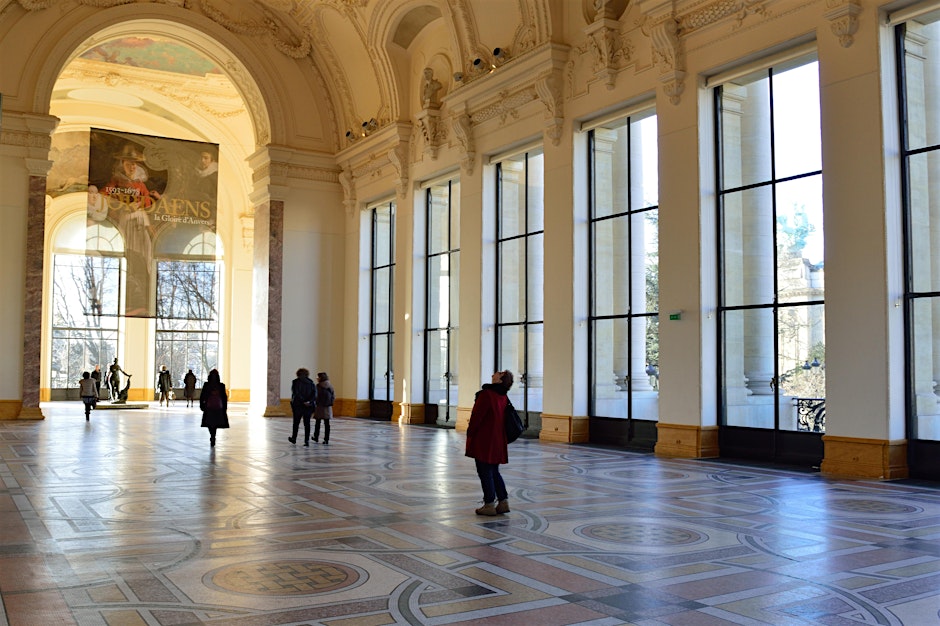
As a member of the Advisory Board, I will join the Digital-Spektrum project team for a workshop at the Petit Palais in Paris, on Friday 24 January from 14:00 to 17:00 CET, to explore Digital Storytelling as an inclusive approach for audience engagement.
The priority of the Digital-Spektrum project is to promote inclusion, diversity, and accessibility in all areas of education, particularly educational experiences that take place in museums. One of the main objectives of the Digital-Spektrum project is to provide museum staff with digital skills to design inclusive museum experiences with and for people with Autism Spectrum Disorder (ASD).
The call for proposal to participate to the next International Digital Storytelling Conference, hosted by the Museu da Pessoa in Brazil from the 6th to the 8th November 2025, has just been published.
There is time until the 15th of February to submit a proposal and you can read all the key information below.
The conference theme, Lives, Voices, and Knowledge in a World on Fire, focuses on the climate crisis and the many ways storytelling can help us think about, observe, and address the interconnected challenges reshaping our world. The gathering invites us to examine how storytelling can drive meaningful dialogue and action around the intersecting crises that define our era.
To frame your proposals we encourage you to consider these thematic tracks. These tracks represent key lenses for exploring how personal narratives, collective experiences, and shared knowledge can inform and inspire action in response to the world’s most pressing social and environmental challenges:
The submission deadline has been extended until the 15th of May.
As a member of the organising committee, I am delighted to share the official announcement of the 1st International Digital Storytelling Festival, hosted in Zakynthos, Greece, from the 27th to the 29th of September 2024.
With the aim of raising discussions about important themes affecting us all, we invite digital storytellers to take part in this festival and to submit stories in relation to the following themes:
Culture
Education
Environment
Health
Science and Research
Society
Ten digital stories will be selected for each theme to be screened during the Festival. These stories will be selected by the relevant Festival Committee (an international team including Digital Storytelling experts, Theme experts, and Artists) using the principles of inclusion regarding age, gender, geographical region, and language. Moreover, the relevant Festival Committee for each theme will select a representative focal digital story to be screened at the end of the festival to attract attention to a global issue in relation to the theme. This story will also be granted the Festival Award for this theme. During the Festival, the screening of these stories will be accompanied by a theme-focussed discussion panel.
I will be part of the jury for the theme ‘Environment’.
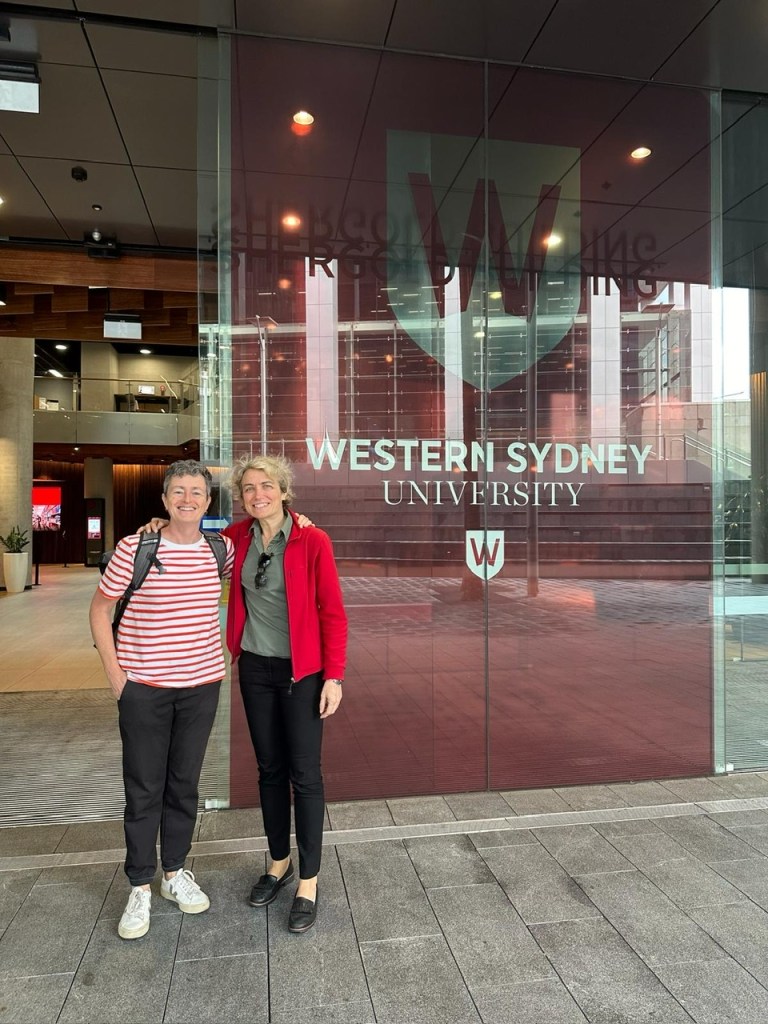
Thursday 28 March, 11am – 1pm, I’ll be facilitating an interactive participatory storytelling workshop at Western Sydney University, School of Humanities & Communication Arts and Writing & Society Research Centre, Parramatta City Campus, Level 7, Rm PC.1.7.78
Please, join us if you are in the area! You can read more information here.
Storytelling helps us unfold the ‘bricolage of the here’ and explore the ‘mess’ of human interactions in a specific place. Stories emerge from individual memories and build shared knowledges. As they convey values and emotions, they are very effective in revealing the differences and similarities between people’s experiences (East, Leah et al. 2010). When those experiences are linked to a particular context, stories become a magnifier of people’s sense of place.
This interactive workshop aims at introducing the concept of place-based participatory storytelling and at exploring how to adapt the 5-step Digital Storytelling model to co-create alternative narratives prompted by the places experienced in our everyday life.
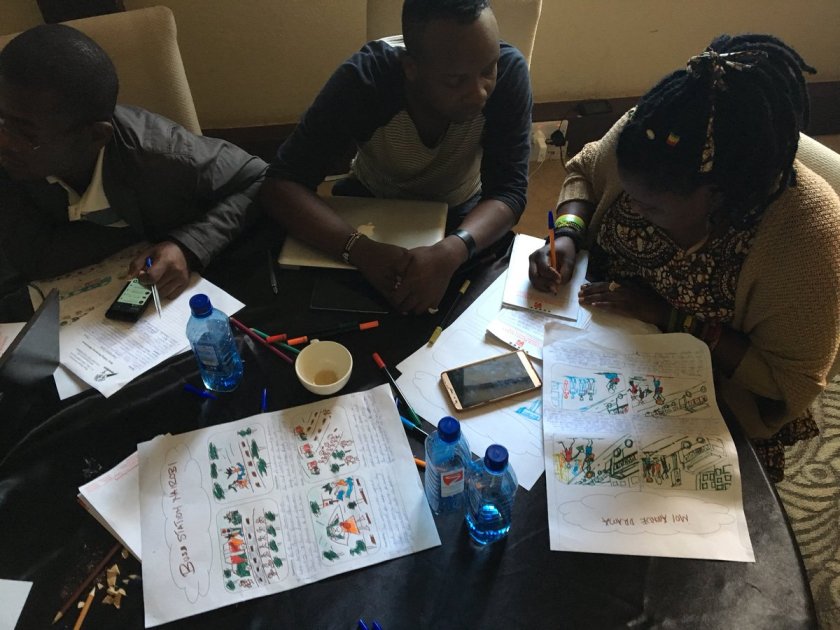
The activity will last 2 hours and will include: – An exploration of various theories and practices within participatory storytelling – A presentation of StoryCenter Digital Storytelling model – A reflection of the effectiveness of creative disruptions to the conventional model – A collaborative storyboarding activity – A collective reflection on the use of storytelling techniques to magnify people’s sense of place.
It is now accessible online the video-recording of my presentation at the European Open and Digital Learning Week 2023, as part of the panel on Well-being, Heritage and Higher Education Learning chaired by Prof. Antonella Poce, University of Roma Tor Vergata, Italy.
You can watch it here 50′ from the start of the panel.
EODLW 2023 – Well-being, Heritage and Higher Education Learning (my talk 50′ from the start)
You can read the abstract below.
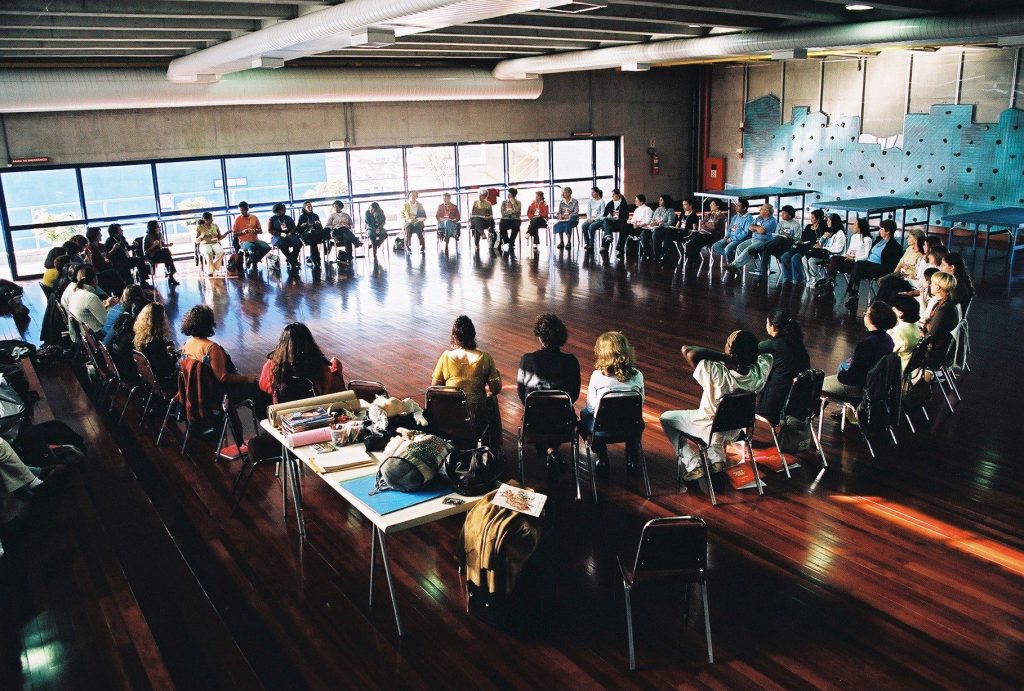
Social interaction between peers is an essential factor in the development of an inclusive practice within formal and non-formal Education, aiming at increasing individual and collective wellbeing. Starting from this premise, Digital Storytelling is presented here as a transformative educational approach, considering the key values of its original model and the flexibility of the various tools applied within this participatory practice. In particular, the use of museum objects, both in the physical and in the virtual space, is suggested as a way of prompting the storytelling process during the story-circle, while exploring personal connections with the object itself. This activity has proved to enhance creativity and collaboration in a context in which mutual learning and peer support are prioritised. Our experience suggests that the role of emotion in the digital storytelling process is central to the promotion of ‘embodiment’, a specific form of knowledge that exists in ‘the telling of stories with emotional meaning’. This extraordinarily rich meaning-making process facilitated in the various steps of the Digital Storytelling approach, that constantly interweaves the personal and the collective, finds its engine in the hyper segmentation of the conventional DS model and its many disruptions driven by co-creation.