I am grateful to work with researchers from Teesside University who are partnering with Mens Minds Matter and Every man can CIC to create digital resources which aims to inspire hope and reduce thoughts of suicide in men. The project titled ‘Stories of hope’ uses digital storytelling methods to support men who have survived a period of mental health crisis to tell their story. The aim of the stories is to help give hope to other men who may be struggling with their mental health. In a review of published literature in the Lancet (2022), researchers from Austria found that sharing positive stories of recovery from mental health difficulties has a small but significant impact on thoughts of suicide in those who are living with these thoughts (Neidenkrotenthaler, 2022). This is called the ‘Papageno effect’ whereby the way that suicide is reported can have a positive or preventative impact on suicidal thoughts or behaviour. Best practice in this area is shared by the Samaritans Media Reporting Guidelines, and any sharing of stories on social or traditional media should consider their role in supporting suicide prevention through the way their share information: Samaritans’ Media Guidelines.
Continue reading “World Suicide Prevention Day 2025 – Stories of Hope: Supporting Men who have survived a mental health crisis in Teesside”Tag: mental health
New publication: Co-designing a Digital Storytelling Toolkit to Improve Youth Mental Wellbeing
Grateful and delighted to have contributed a chapter on co-designing a digital storytelling toolkit for personal and collective wellbeing to this very interesting new volume on museum education edited by Prof Antonella Poce (Università di Roma Tor Vergata).
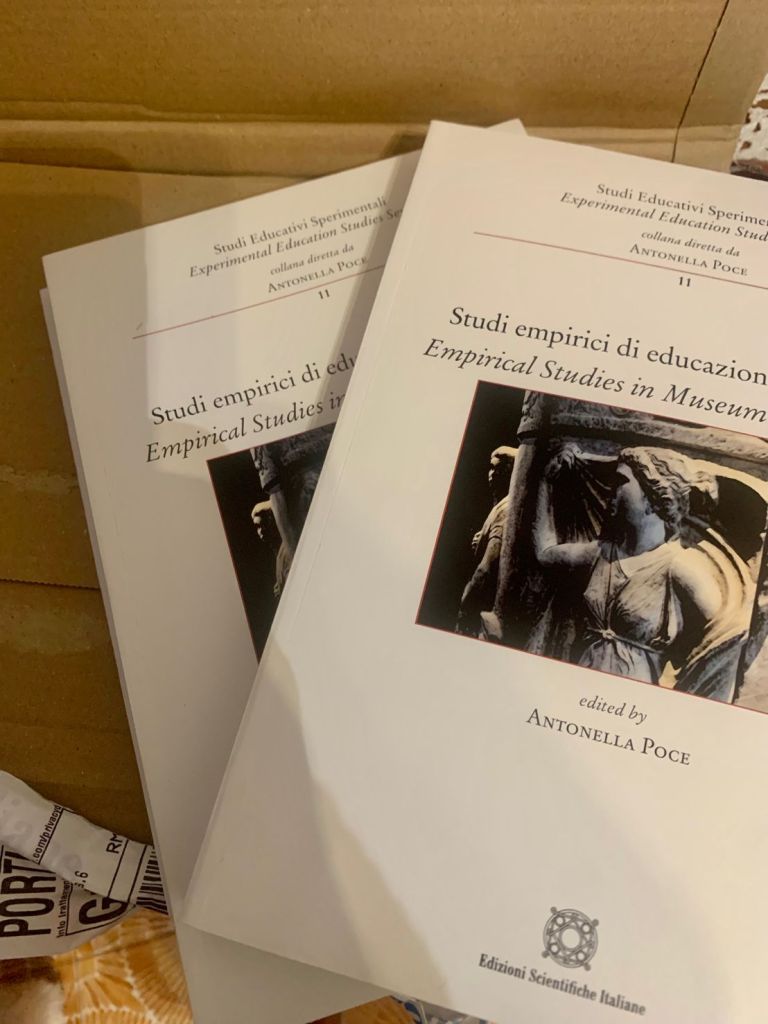
Please, read the abstract below.
Social interaction between peers is an essential factor in the development of an inclusive practice within formal and non-formal Education, aiming at increasing individual and collective well-being. Starting from this premise, Digital Storytelling was identified as the core methodology of this research, considering the key values of its original model and its flexibility as a participatory practice that enhances creativity and collaboration in a context in which mutual learning and peer support are prioritised. Considering the ongoing global challenge of funding mental health services, there is fertile ground for innovation, especially in the area of creative, online approaches to mental health literacy and healthy relationships among young people.
This paper explores the potential of applying participatory approaches, co-design techniques and digital storytelling as mixed methods to support youth mental well-being.
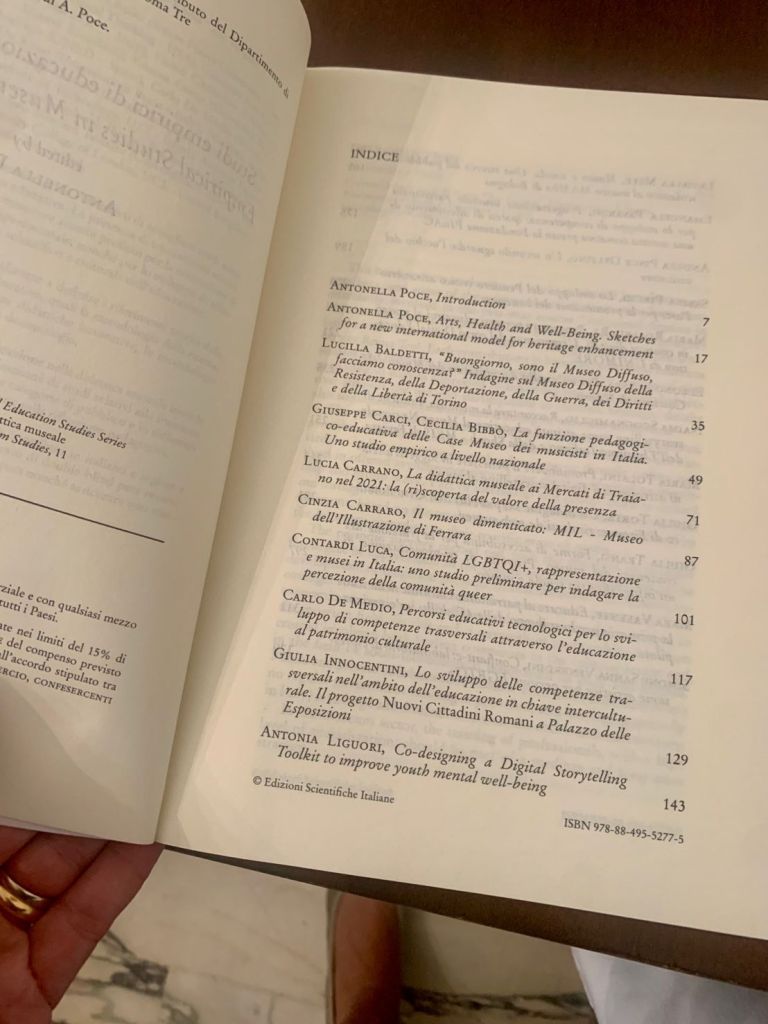
Please, cite as: Liguori, A., Co-designing a Digital Storytelling Toolkit to Improve Youth Mental Wellbeing, in Poce, A. (ed) Empirical Studies in Museum Education 3, E.S.I. – Edizioni Scientifiche Italiane, pp.143-160, ISBN: 978-88-495-5277-5.
Mental health and wellbeing: DS Toolkit for peer support
An exciting collaboration between young people, researchers and Mental Health Foundation UK.

A Digital Storytelling Toolkit was co-designed by a group of teen-agers and a team of researchers from the Storytelling Academy (Loughborough University) led by Antonia Liguori, in collaboration with Mental Health Foundation UK.
The Digital Storytelling Toolkit has been designed to help young people have better conversations around mental health and wellbeing.
Using insights we gained during a series of six storytelling workshops with students ages 13-16, researchers from Loughborough University have developed this resource to help young people talk about mental health and wellbeing in smaller groups.
When done mindfully, discussing the provided materials and prompts in groups can help them improve their sense of connection and belonging, as well as their self-awareness.
You can access the Digital Storytelling Toolkit via this link: https://digitalstorytellingtoolkit.uk/
This collaboration was supported by the Erasmus+ project SOLIS – DEVELOPING WELLBEING AND SOCIAL INCLUSION
 Antonia Liguori / Participatory Storytelling