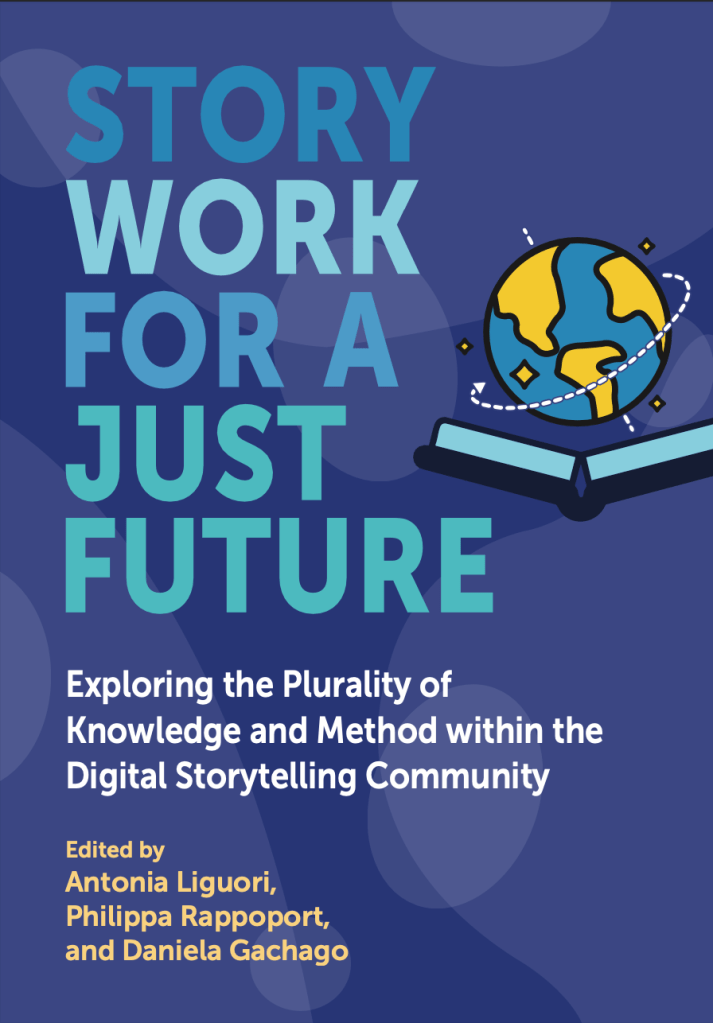
Delighted to announce the publication of our open access book Story Work for a Just Future: Exploring the Plurality of Knowledge and Method within the Digital Storytelling Community.
This collection from 47 authors in 15 countries represents the diverse voices of our international Digital Storytelling community, both in style and content. We hope it will inspire deeper connections, fruitful collaborations, and the creation and sharing of new stories that together will build a just future.
Very grateful to everyone who contributed to this important piece of work and to the Smithsonian Scholarly Press (SISP) for giving us the opportunity to publish with them.
In this piece we reflect on our process of coming together as an interdisciplinary and inter-professional team to challenge pre-conceived meanings and assumptions when ‘talking about’, ‘designing’ and ‘doing/facilitating/delivering(!)’ community engagement activities around environmental issues.
This paper proposes a critical reflection on the use of language to address the challenge of promoting and supporting civic agencies in adaptation to increasing extreme weather risk. Such reflection needs to focus on the opportunities and limitations of language, and the navigation amongst multiple or contested meanings within interdisciplinary and inter-sectorial collaborations. This commentary was inspired by the authors’ conversations on their journey in writing the paper — Liguori et al. (2023) “Exploring the uses of arts-led community spaces to build resilience: Applied storytelling for successful co-creative work” and the impact it had on their understanding of various language systems. Here writing was conceived as a form of networking, undertaking a sequence of intimate, in-depth discussions in a safe space. ‘Playing’ with words, moving out from our disciplinary homes, provided a fertile way of thinking within multi/inter-sectorial/disciplinary conversations to expand the language system for meaningful community engagement around local climate adaptation. Three key terms were at the core of these diverse — and sometimes divergent — ways of looking at social preparedness for extreme weather events: disruption, empowerment, and creative ecosystem. The meta-reflections, based on iterative conversations around these three key terms, highlight the importance of explorations of language as a generative meaning-making process that can be boundary-spanning.
There is significant value in understanding the implications of language used in public engagement — its different interpretations, their loading and potential for transformed thinking when conceived creatively. Such insight can contribute to more effective approaches for participatory research and practice working with communities when addressing issues related to climate adaptation. This commentary argues that the socially engaged or participatory arts are particularly well placed to be active in such processes.
Delighted to have published our editorial and have worked with fantastic colleagues and dear friends (Philippa Rappoport, Smithsonian Institution, US; Antonella Poce, University of Roma Tor Vergata, Italy; Matthew Rabagliati, UK National Commission for UNESCO) on this very important Research Topic published by Frontiers, that addresses the fourth Sustainable Development Goal, which is to “ensure inclusive and equitable quality education and promote lifelong learning opportunities for all.”
This is the beginning of our editorial: Ambitious targets, as defined in the fourth United Nations Sustainable Development Goal (SDG 4) on “quality education” (WEF, 2016), are essential to stimulate innovative research around complex systems and also to extend and amplify the debate well beyond the academic community. Yet to achieve those targets inclusive language within policy and practice play a critical role (Kennett, 2021), in particular when considering communication as a tool to support democratic participation and knowledge exchange beyond institutionalized borders.
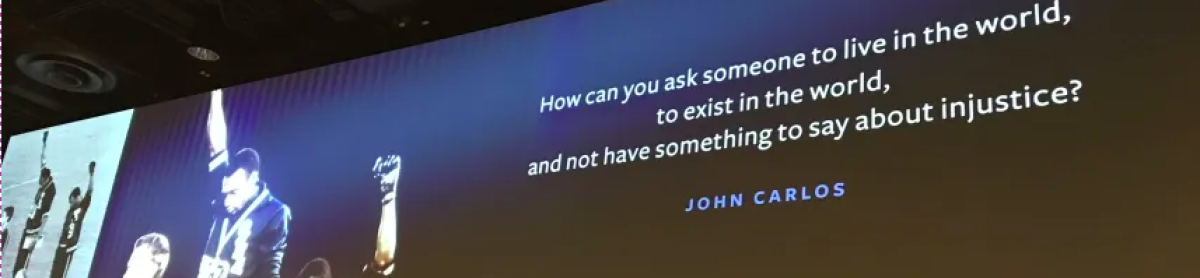
Our latest Open Access publication is inspired by the panel we delivered at the International Digital Storytelling Conference in the Washington D.C. and Baltimore areas, US, in June 2023.
Please, read the abstract below.
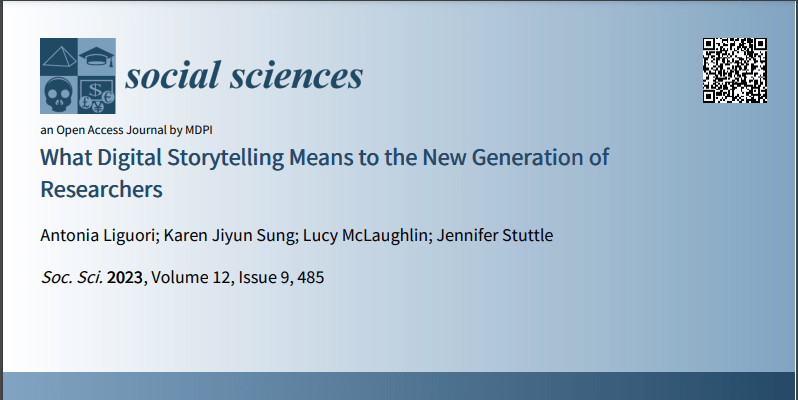
A new, hybrid way of conceiving Digital Storytelling (DS) in applied research is presented here as an essential trigger to challenge, expand, and eventually re-frame the way in which DS is currently codified. The three methodological perspectives described in this paper share a common understanding of practice-as-research. They position themselves within three distinct disciplines—illustration, animation, and the creative arts in education—but have a strong commitment to interdisciplinarity. Each of them is trying to respond to a specific cultural and personal issue (e.g., sense of identity, mental health, attainment within competitive environments, etc.) and also serves as a prompt to reflect on a potential new aspect of DS as research, linked to the how, the what, and the why of these multiple and complementary applications. The intention of this paper is not to propose one alternative way of operating, but to inspire other researchers wanting to apply this approach in their work to constantly challenge any pre-conceived form and process, while prioritizing the democratization of knowledge production and informing their research process with co-design and participatory principles. The take-away message from these three case studies is that DS will be, in fact, embraced by the new generations of researchers as a sustainable practice all the more, as its many disruptions will generate spaces for co-creation and self-representation to emerge, and will stimulate everyone involved in the research process to challenge their own way of thinking and to go beyond what was codified by others and by their own practice too.
Please, cite as: Liguori A, Sung KJ, McLaughlin L, Stuttle J. What Digital Storytelling Means to the New Generation of Researchers. Social Sciences. 2023; 12(9):485. https://doi.org/10.3390/socsci12090485
Co-developing a Framework for Adaptive Participatory Storytelling Approaches (APSA)
Another paper just published from the DRY project, exploring how applied storytelling can support knowledge exchange and public engagement.
Please, read the abstract below.
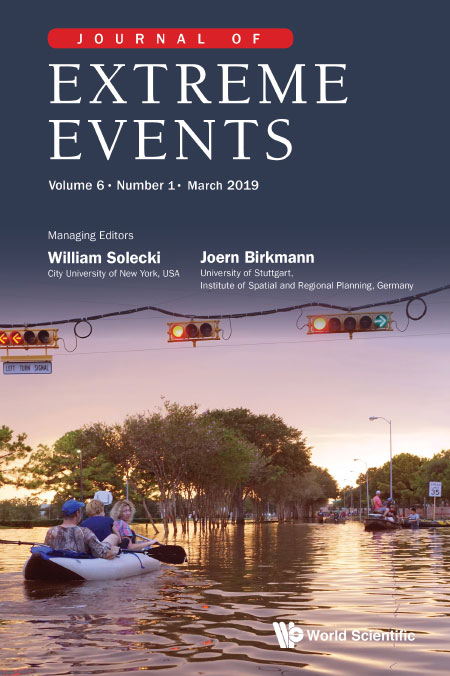
The transdisciplinary Drought Risk and You (DRY) project aimed to interweave storytelling and science as a way of increasing the different voices and types of knowledge (specialist, local) within drought risk decision-making in the UK. This paper critically reflects on our emergent process of drawing across different methodologies to create Adaptive Participatory Storytelling Approaches (APSA). APSA enable more tailoring to people and setting than existing methods, recognizing the specificity of local risk contexts and communities, and in terms of social dynamics, cultural values and local knowledge. APSA are situated, storytelling methodologies applied in the social sciences and arts/humanities, giving strong attention to meaningful participation and sustainable coproduction in both process and outputs. The paper offers other researchers and practitioners insights into working with APSA as a suite of creative storytelling options prioritizing methodological principles of active listening and adapting. APSA require creative thinking along multiple spectra, including how to balance different axes in APSA including: topic (drought risk)-focused with topic (drought risk)-peripheral or oblique, participant-led with researcher-led, and visualization-led with audio-led. We reflect on the challenges, opportunities and values of co-working with APSA, and offer a flexible framework for its application and iterative evaluation embedded through the process. We propose this as a starting point for other transdisciplinary projects to tackle themes that prove difficult for communities to connect with during community-engaged research, in this case, hidden risks like drought and climate change. This is timely given the power and mounting popularity of storytelling for behavior change, research insight and policy, and the need to capture and share different knowledges for climate resilience.
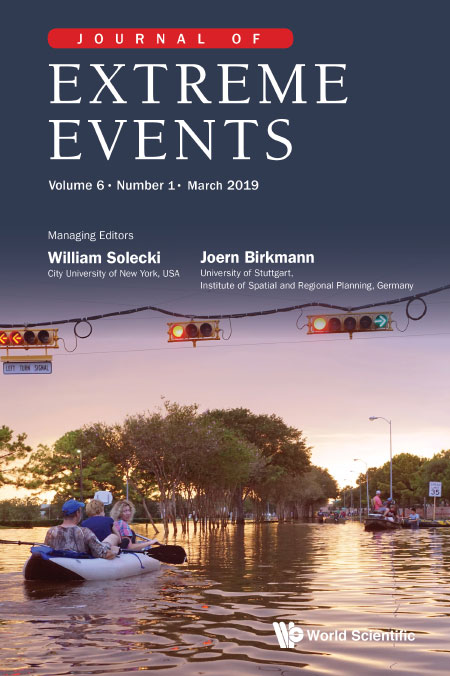
Please, cite as: Roberts, L, Liguori, A, McEwen, L, Wilson, M. (2023). The challenge of engaging communities on hidden risks: co-developing a framework for Adaptive Participatory Storytelling Approaches (APSA), Journal of Extreme Events, ISSN: 2345-7376. DOI: https://doi.org/10.1142/S2345737623410026
 Antonia Liguori / Participatory Storytelling