Read our latest publication exploring applied storytelling as both individual and social practice.
In a time of many extremes — climate, pandemic, isolation — there is strength in community linkages that can provide resilience through arts-generated connections. The artsled recovery approach to communities suffering extreme events and social isolation offers the capacity to use applied storytelling as both individual and social practice, and to generate creative contributions to social change. This paper will explore the extent to which, in bringing people together, the arts can create spaces that are open and conducive to real dialogue and engagement, developing resilience with wider applications.
Monkivitch (EO of Creative Recovery Network) talks of listening to the ecology of voices, advocating for the voice of the artist to be central to government recoveries from extreme events. The intent of looking at co-creative systems or ecologies is to explore beyond disciplinary boundaries and articulate a social purpose both for the artists and the community involved in the curation. The creative arts process, in extreme events contexts, offers engagement with and empowerment of the community to develop and sustain resilience and adaptability. In this paper, a team of artists and academics with expertise in community participation, applied storytelling, socially-engaged arts and water risk management, will reflect on a variety of approaches to co-create arts-led community spaces.
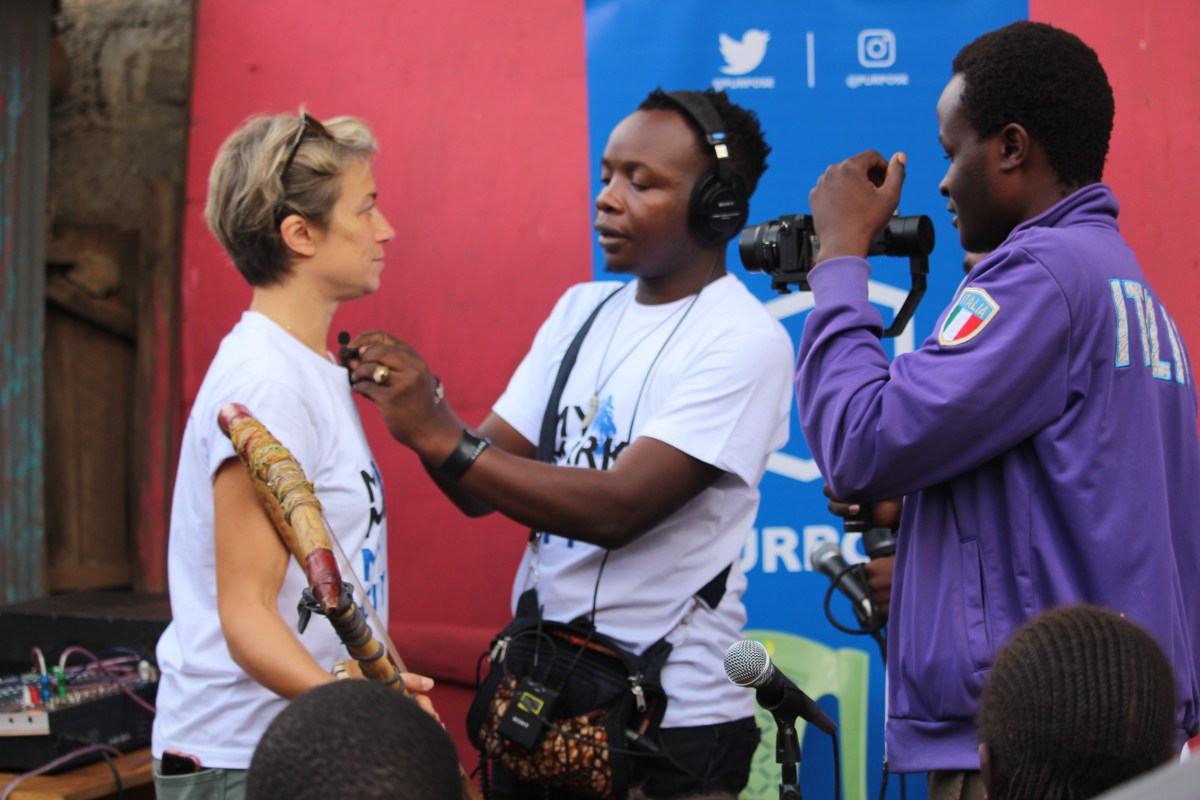
Two case studies are described to explore collaboration and co-production between creative artists and their communities as a participatory process to develop emotional resilience.
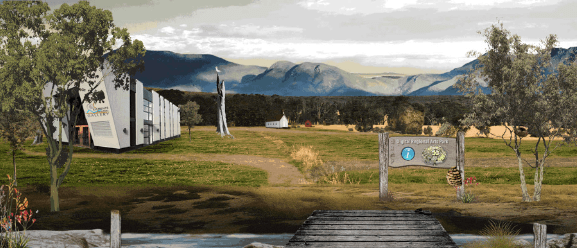
The UK-based case study, ‘The Reasons in the Fens’, brought together diverse members of the community to develop and share personal stories and to work with a songwriter to compose a community song about the impact of the flood drought nexus in their region leading to developed empathy for diversities of views. The Australian case-study, the digital Regional Arts Park in Victoria, enabled co-curation using a creative ecosystem design which related strongly to storytelling for resilience. Both case studies offer opportunities to reflect on how a creative ecosystem provides a framework for exploring the disruptive role of the cultural sector in space/place resilience-building. The ongoing purpose of a creative ecosystem, as described in this paper, is in fact to strengthen creative organizations and individuals, which will develop a complex system ‘involving a multitude of people, institutions and places. To flourish, they require access to a suite of interconnected resources and capabilities’ (Creative Victoria (2016). Creative State 2016–2020, p. 19. https://creative.vic.gov.au/data/assets/pdf_file/0007/54349/creativestate.pdf). The requirement is for the cultural, creative, social and commercial parts of this ecosystem to have meaningful interactions. This creative ecosystem potentially leads to a dynamic model with a vibrant or creative interplay between cultural values and stories. As Hartley and Potts (2014). Cultural Science: The Natural History of Stories, Demes, Knowledge and Innovation. London: Bloomsbury, p. 70) indicate, ‘culture is the “survival vehicle” for groups (and) stories are the survival vehicle for culture’.
Please, read the full paper open access on the publisher website.
Citation: Liguori, A, Rossignol, KL, Kraus, S, McEwen, L, Wilson, M (2023) Exploring the uses of arts-led community spaces to build resilience: Applied storytelling for successful co-creative work, Journal of Extreme Events, 8(4), 2250007, ISSN: 2345-7376. DOI: 10.1142/S2345737622500075.
 Antonia Liguori / Participatory Storytelling