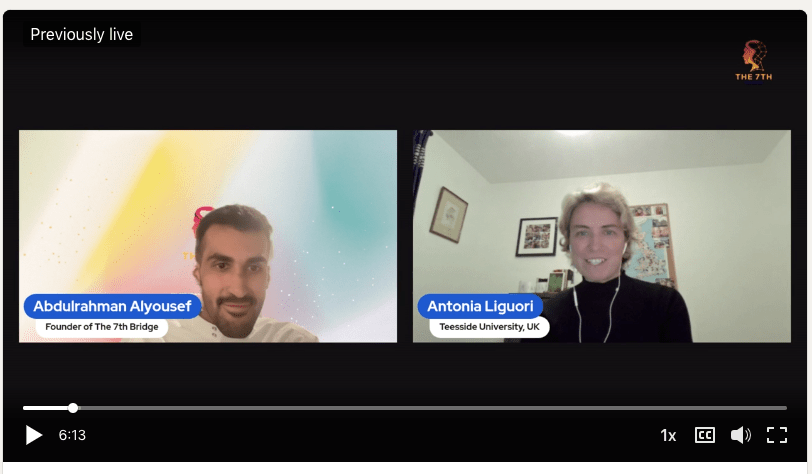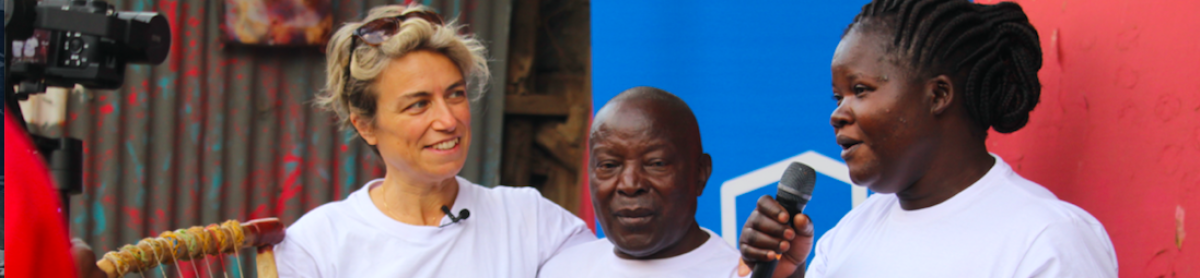
The video recording of my talk part of ‘The Art of Cultural Fluency’ event hosted by The 7th Bridge – a network of cultural heritage professionals based in Riyadh, Saudi Arabia – is now available on LinkedIn (from 6’10”) via the link below:
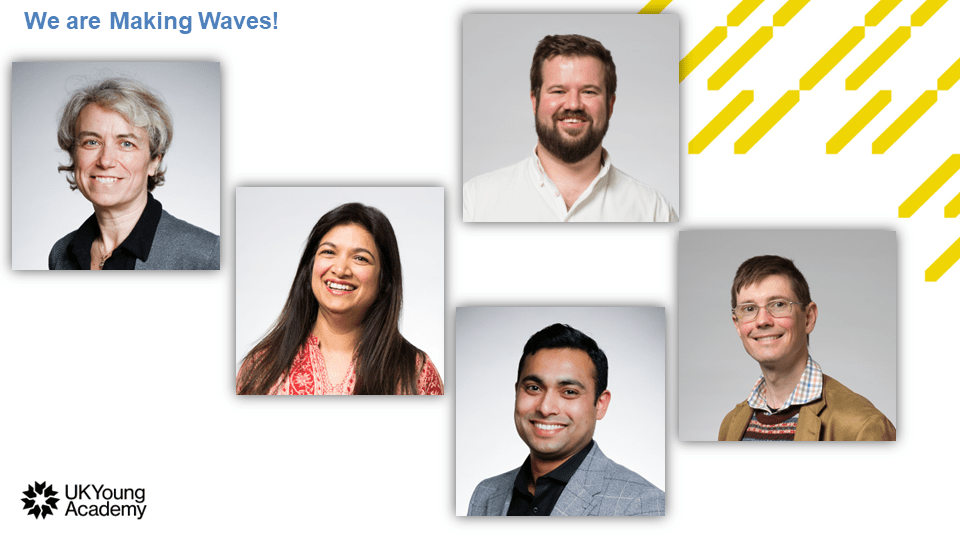
I am delighted to announce that from January 2025 I will work with Aditee Mitra (Research Fellow, Cardiff University), Alistair McConnell (Assistant Professor, Heriot-Watt University), Imrose Muhit (Lecturer in Sustainable Infrastructure Engineering, Teesside University), and Charles Maurice Pigott (Lecturer in Hispanic Studies, University of Strathclyde), on the UKYA project Making Waves.
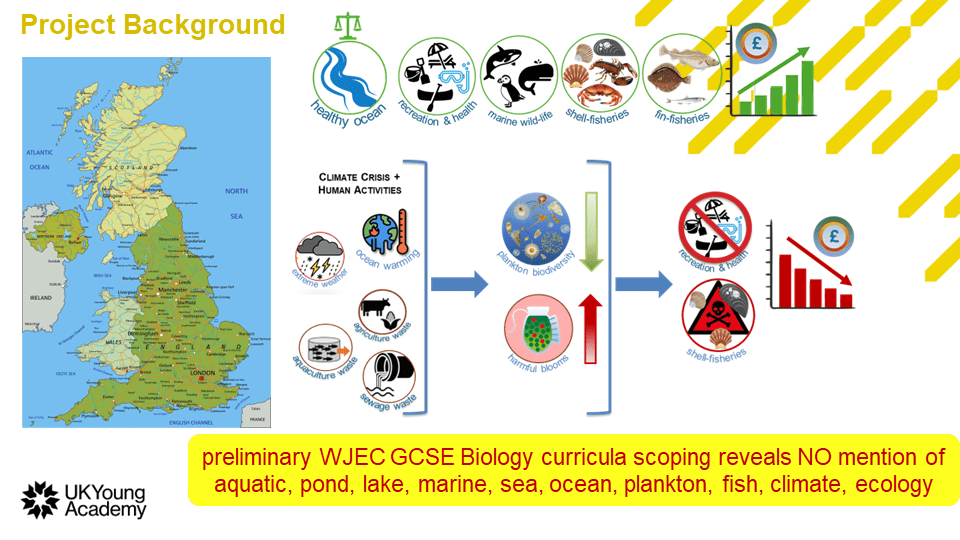
Recognising the vital role of education in fostering ocean literacy, this project aims to embed vital knowledge about plankton ecology and the impacts of human activities within the UK senior school curricula.
Making Waves will develop innovative, inclusive learning resources through participatory storytelling and by co-creating engaging methods, ensuring that students of all backgrounds and abilities can access the information. The project will thus foster young people’s understanding and appreciation of marine ecosystems, empowering the next generation to continue the vital work of conserving and restoring our oceans for the future health of our planet.
The benefits of the story-telling/story-listening loop within participatory research: Exploring diverse experiences and methods for the co-production of knowledge.
In a time of worrying ‘critical misunderstandings’ worldwide, this talk – linked to the soon to be published by Smithsonian Scholarly Press open access book ‘Story Work for A Just Future’ edited by Antonia Liguori, Philippa Rappoport, Daniela Gachago – explores the value of co-created “Story work”.
In particular, we will focus on how different storytelling approaches could blur boundaries and expand opportunities for collaborative research, while proposing mutual learning and co-creation of knowledge as a way forward to improve our society. Key questions prompted by this talk are:
• How do we make the digital storytelling practice further expand globally in a way that is both locally-tailored-led-owned, but also coherent with the original ethos?
• Is co-creation an infallible antidote to exclusion and marginalization?
• Can we determine when digital storytelling ends and a new practice starts, if they are based on the same ethos?
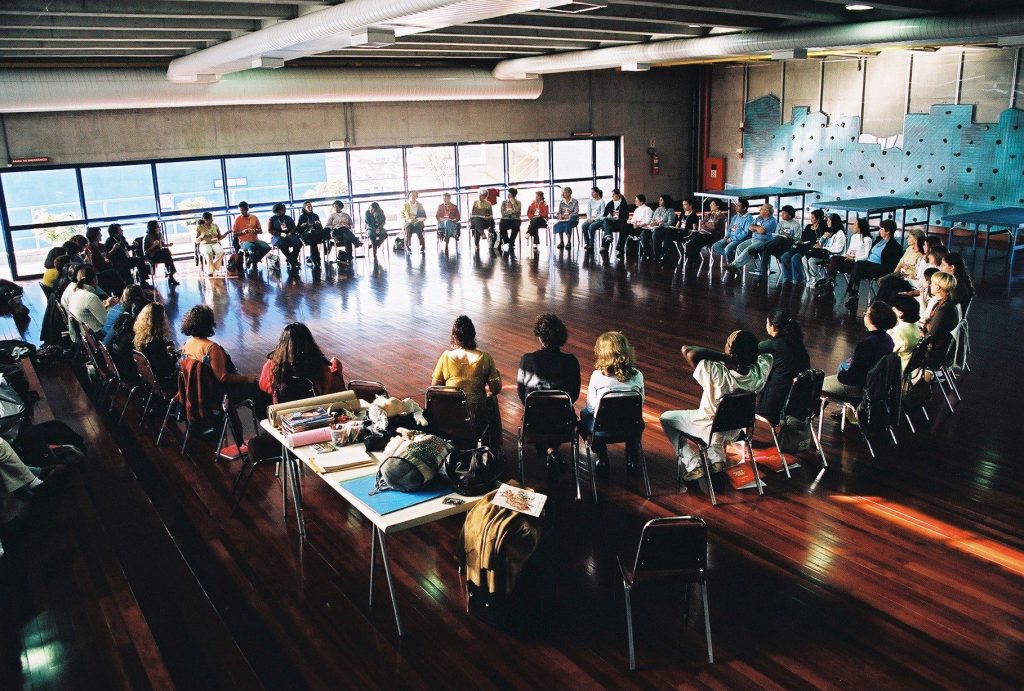
On Monday the 28th of October from 12:00 to 14:30 we will meet at the Transporte Bridge Visitor Centre in Middlesbrough and we’ll experiment with collective story-listening to interpret and showcase stories of this iconinc local landmark.
In this pre-Being Human Festival event, we draw inspiration from this still impressive bridge that has been a prominent feature of the Middlesbrough skyline since 1911 and a place for memories and encounters. Reflecting on the bridge’s symbolic significance and historical importance, participants will engage in small group storyboarding sessions to capture memories of the past and envision the region’s future.
I am delighted to join the Healthcare Project and Change Association – HPCA for the november webinar with a talk on “The benefits of the story-telling/story-listening loop within participatory research: exploring diverse experiences and methods for the co-production of knowledge”.
Please read the abstract below and register to this event via this link.
Storytelling has been defined as ‘the artform of social interaction’ (Wilson, 2021), not only for its inner dynamics, but also for its power to unlock grass-roots knowledge, explore dilemmas, develop community resilience, and engender change. In a time when academia and cultural institutions are being challenged to encourage broader engagement with diverse knowledges, practices that support shared knowledge and co-creation become important. Stories can generate empathy and trust among diverse communities and audiences and at the same time demonstrate their usefulness due to their power to give meaning to human behaviours and to trigger emotions (Bourbonnais and Michaud, 2018).
In this talk we acknowledge the existence of multiple truths when we recognise, as the Nigerian novelist Chimamanda Ngozi Adichie observes, ‘the danger of a single story’ (2009). As she describes, ‘because our lives and our cultures are composed of a series of overlapping stories, if we hear only a single story about another person, culture, or country, we risk a critical misunderstanding’. In a time of worrying ‘critical misunderstandings’ worldwide, this talk – linked to the soon to be published by Smithsonian Scholarly Press open access book ‘Story Work for A Just Future’ edited by Antonia Liguori, Philippa Rappoport, Daniela Gachago – explores the value of co-created “Story work”.
In particular, we will focus on how different storytelling approaches could blur boundaries and expand opportunities for collaborative research, while proposing mutual learning and co-creation of knowledge as a way forward to improve our society.
Key questions prompted by this talk are:
How do we make the digital storytelling practice further expand globally in a way that is both locally-tailored-led-owned, but also coherent with the original ethos? Is co-creation an infallible antidote to exclusion and marginalization? Can we determine when digital storytelling ends and a new practice starts, if they are based on the same ethos?