What Digital Storytelling Means to the New Generation of Researchers

Our latest Open Access publication is inspired by the panel we delivered at the International Digital Storytelling Conference in the Washington D.C. and Baltimore areas, US, in June 2023.
What Digital Storytelling Means to the New Generation of Researchers

Please, read the abstract below.

A new, hybrid way of conceiving Digital Storytelling (DS) in applied research is presented here as an essential trigger to challenge, expand, and eventually re-frame the way in which DS is currently codified. The three methodological perspectives described in this paper share a common understanding of practice-as-research. They position themselves within three distinct disciplines—illustration, animation, and the creative arts in education—but have a strong commitment to interdisciplinarity. Each of them is trying to respond to a specific cultural and personal issue (e.g., sense of identity, mental health, attainment within competitive environments, etc.) and also serves as a prompt to reflect on a potential new aspect of DS as research, linked to the how, the what, and the why of these multiple and complementary applications. The intention of this paper is not to propose one alternative way of operating, but to inspire other researchers wanting to apply this approach in their work to constantly challenge any pre-conceived form and process, while prioritizing the democratization of knowledge production and informing their research process with co-design and participatory principles. The take-away message from these three case studies is that DS will be, in fact, embraced by the new generations of researchers as a sustainable practice all the more, as its many disruptions will generate spaces for co-creation and self-representation to emerge, and will stimulate everyone involved in the research process to challenge their own way of thinking and to go beyond what was codified by others and by their own practice too.

You can read the full paper via this link: https://www.mdpi.com/2076-0760/12/9/485

Please, cite as: Liguori A, Sung KJ, McLaughlin L, Stuttle J. What Digital Storytelling Means to the New Generation of Researchers. Social Sciences. 2023; 12(9):485. https://doi.org/10.3390/socsci12090485
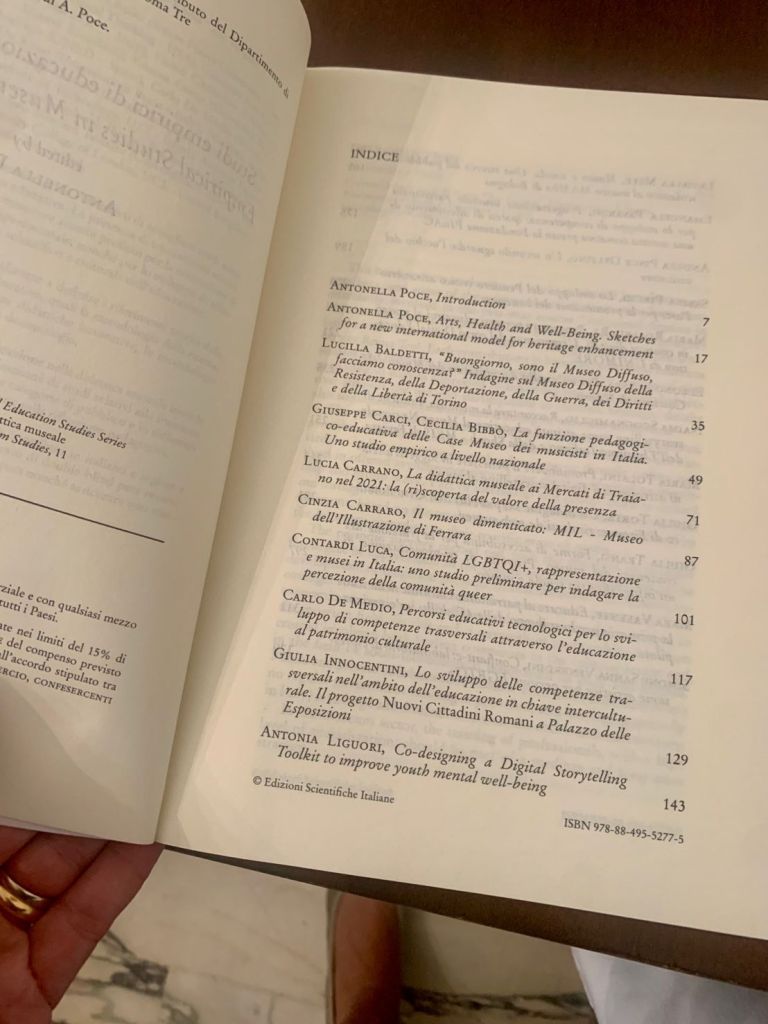
New publication: Co-designing a Digital Storytelling Toolkit to Improve Youth Mental Wellbeing

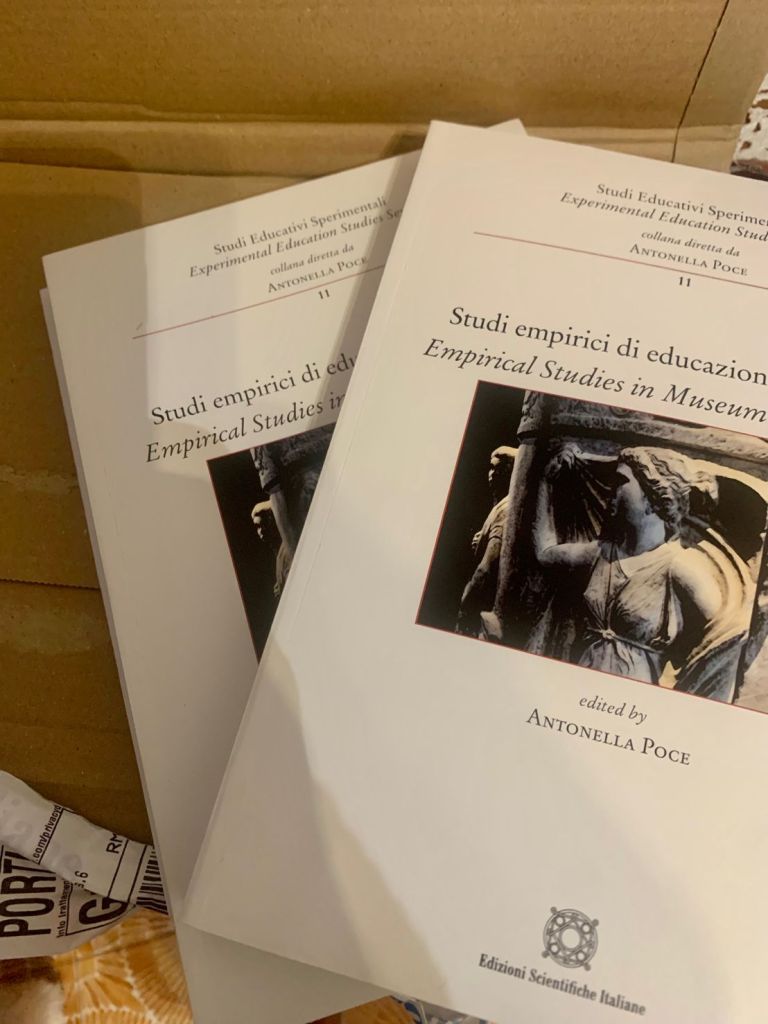
Grateful and delighted to have contributed a chapter on co-designing a digital storytelling toolkit for personal and collective wellbeing to this very interesting new volume on museum education edited by Prof Antonella Poce (Università di Roma Tor Vergata).

Please, read the abstract below.

Social interaction between peers is an essential factor in the development of an inclusive practice within formal and non-formal Education, aiming at increasing individual and collective well-being. Starting from this premise, Digital Storytelling was identified as the core methodology of this research, considering the key values of its original model and its flexibility as a participatory practice that enhances creativity and collaboration in a context in which mutual learning and peer support are prioritised. Considering the ongoing global challenge of funding mental health services, there is fertile ground for innovation, especially in the area of creative, online approaches to mental health literacy and healthy relationships among young people.
This paper explores the potential of applying participatory approaches, co-design techniques and digital storytelling as mixed methods to support youth mental well-being.

Please, cite as: Liguori, A., Co-designing a Digital Storytelling Toolkit to Improve Youth Mental Wellbeing, in Poce, A. (ed) Empirical Studies in Museum Education 3, E.S.I. – Edizioni Scientifiche Italiane, pp.143-160, ISBN: 978-88-495-5277-5.

New Publication: Amplifying Community Voices for Sustainable Climate Adaptation

Springer book cover Handbook global social problems

Delighted to see our work on Amplifying Community Voices for Sustainable Climate Adaptation. Future Yetu: A Digital Storytelling Project in the Nairobi Slum of Korogocho published on The Palgrave Handbook of Global Social Problems.
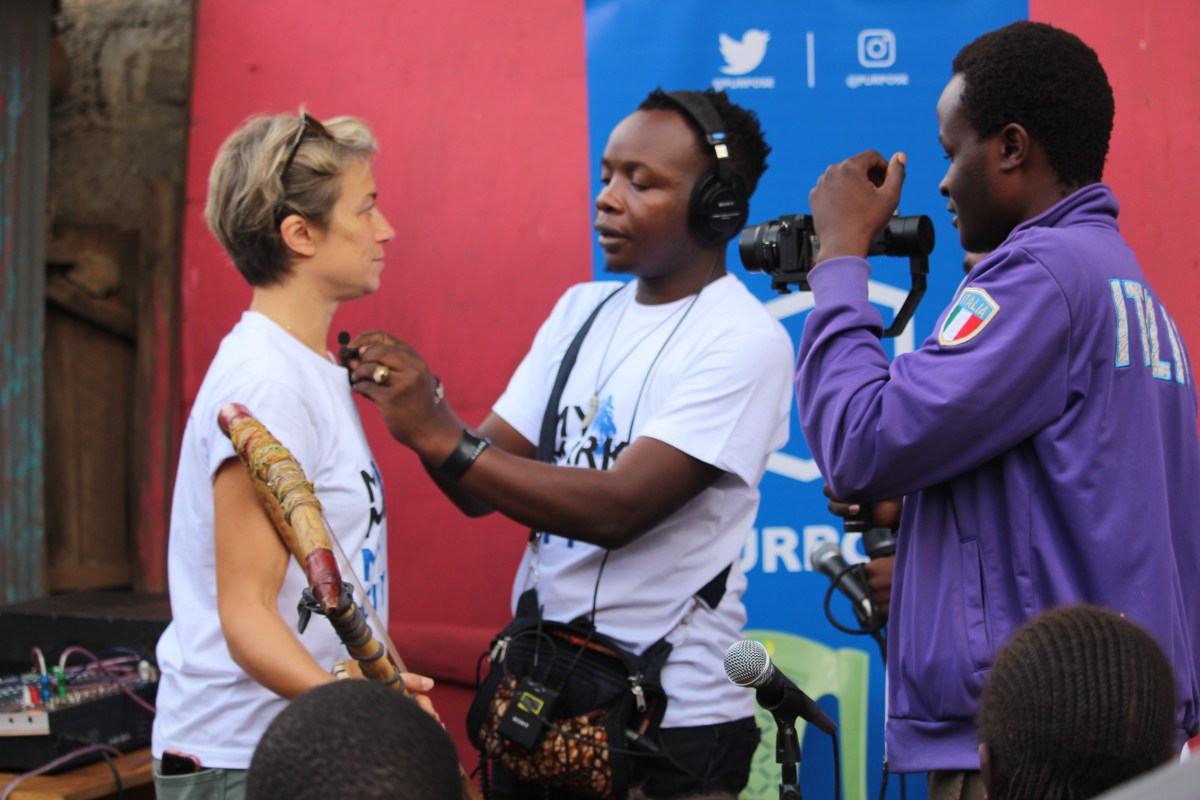
Always wonderful to work with the amazing artist and activist Daniel Onyango and the brilliant landscape architect Pia Jonsson! And this time we were also joined by Humphrey Otieno, whose mission is to involve communities in informing and improving policies in Nairobi.

Please, read our abstract here.

There is increasing awareness of how crucial is developing participatory approaches that could effectively dismantle knowledge hierarchies and facilitate conversations across various sectors of the society in environmental decision-making (Konisky and Beierle, Soc Nat Resour 14(9):815–826, 2001). Digital storytelling and other creative approaches can assist individuals to overcome barriers to participation (Liguori et al., Front Environ Sci 8:589856, 2021) as well as having a collective function in building a sense of community (McEwen et al., Reweaving urban water-community relations: creative, participatory river ‘daylighting’ and local hydrocitizenship. Transactions of the Institute of British Geographers, 2020). Nevertheless, storytelling is often applied as a small-group workshop activity, that can rarely produce large-scale impact beyond the community in which it is applied, and often reveals its limitations in the replicability of the creative process without the presence of an expert facilitator. The Future Yetu project is described and analyzed as a case study to provide new insights on how to co-design creative approaches and tools that can facilitate meaningful participation, amplify community voices, promote alternative livelihood initiatives, and influence policymaking for sustainable climate adaptation. A set of recommendations on how to expand knowledge exchange opportunities between residents and policymakers are shared as a way of inspiring other communities that have similar environmental issues, with the necessary acknowledgment and deep consideration of local challenges and opportunities. In fact, one of the key lessons learned through this project is that community engagement around issues related to climate change must be tailored to local needs and imply the involvement of committed stakeholders at a very early stage. By analyzing a co-creative, 4-step process based on issue-idea-solution-implementation, this chapter offers insights on new creative and democratic ways of working with not only “hard to reach” groups, but also “hard to engage” community members, based on dialogue and social capital.

Continue reading our chapter online.

New publication: Participatory Action Research in Digital Storytelling: Using Mobile Technology to Co-Create Social Change in Kenya

A real privilege to be part of this fascinating book on Co-teaching/co-research in contexts of inequality

This chapter reflects on the outcomes of an ongoing transnational partnership between Hope Raisers, a youth-led NGO based in Korogocho slum in Nairobi, Kenya, and the Storytelling Academy at Loughborough University in the United Kingdom (UK). A group of researchers and artists explore the value of digital storytelling as a tool for participatory action research (PAR) through an exploration of the challenges and opportunities of applying this tool to facilitate online and face-to-face conversations.

The focus is around issues of global interest from a local and personal perspective. A number of case studies are discussed to demonstrate the impact of a digital storytelling mobile lab, via PAR, on a group of stakeholders including community members, Nairobi-based artists and UK-based researchers. The case studies recount the processes of exploring hybrid forms of storytelling (digital and performative) to co-design a public event focused on waste management and to develop community-led solutions to the design of urban spaces. The methodological, social and cultural challenges faced while applying PAR approaches to facilitate the digital storytelling process are addressed.

There is critical reflection on the ways in which workshop participants and other storytellers were supported in shared, collaborative and asynchronous projects from different, non-traditional learning locations. Through this, it is demonstrated that, while PAR approaches promote social justice, there are a number of ethical dilemmas to tackle and protocols to develop. In this way the authors share different ways of applying a culturally appropriate and practical PAR approach to address societal issues and create social change.

This chapter is part of the fascinating book Co-teaching/co-research in contexts of inequality: Using networked learning to connect Africa and the world available open access via this link.

Mental health and wellbeing: DS Toolkit for peer support

An exciting collaboration between young people, researchers and Mental Health Foundation UK.

A Digital Storytelling Toolkit was co-designed by a group of teen-agers and a team of researchers from the Storytelling Academy (Loughborough University) led by Antonia Liguori, in collaboration with Mental Health Foundation UK.

The Digital Storytelling Toolkit has been designed to help young people have better conversations around mental health and wellbeing.
Using insights we gained during a series of six storytelling workshops with students ages 13-16, researchers from Loughborough University have developed this resource to help young people talk about mental health and wellbeing in smaller groups.

When done mindfully, discussing the provided materials and prompts in groups can help them improve their sense of connection and belonging, as well as their self-awareness.

You can access the Digital Storytelling Toolkit via this link: https://digitalstorytellingtoolkit.uk/

This collaboration was supported by the Erasmus+ project SOLIS – DEVELOPING WELLBEING AND SOCIAL INCLUSION